
“It Was Just an Accident,” the Iranian film directed and written by Jafar Panahi (“The White Balloon”), was the winner of this year’s Palme d’Or at Cannes and, somewhat inexplicably, is France’s submission for Best International Film at the 2026 Academy Awards. Still, we should be grateful that other countries are willing to support and promote Iranian artistic projects directed by directors banned by the regime. Last year, it was Germany that submitted “Seed of the Sacred Fig” as its Academy submission.
A genre-defying movie, “It Was Just an Accident” hops between slapstick comedy and chilling thriller, oftentimes blending the two. These sudden shifts between the absurd and the dramatic are both the film’s strength and weakness.
Arrested several times over the last 25 years and imprisoned by Iranian authorities, often without specific charges but almost always related to his filmmaking, his most recent prison stay was in 2022; released in 2023 after he began a hunger strike. While incarcerated, his feelings of isolation and hopelessness mirrored that of his fellow prisoners. Jafar was blindfolded and interrogated for eight hours a day, its own brand of torture, and then released as suddenly as he was arrested. Forbidden by the government to make films, this ban was lifted after he was released from prison. The catch, because of course there is one, is that he could only film in Iran with official permission, permission that will never come.
“It Was Just an Accident” was shot in secret, much like his other features. Using guerrilla tactics, with a run-and-gun style that both helped and hindered the continuity of the scenario, he sped in and out of locations that easily disguised what he was doing. He infused his most recent experience in prison into the histories of the characters in this movie.
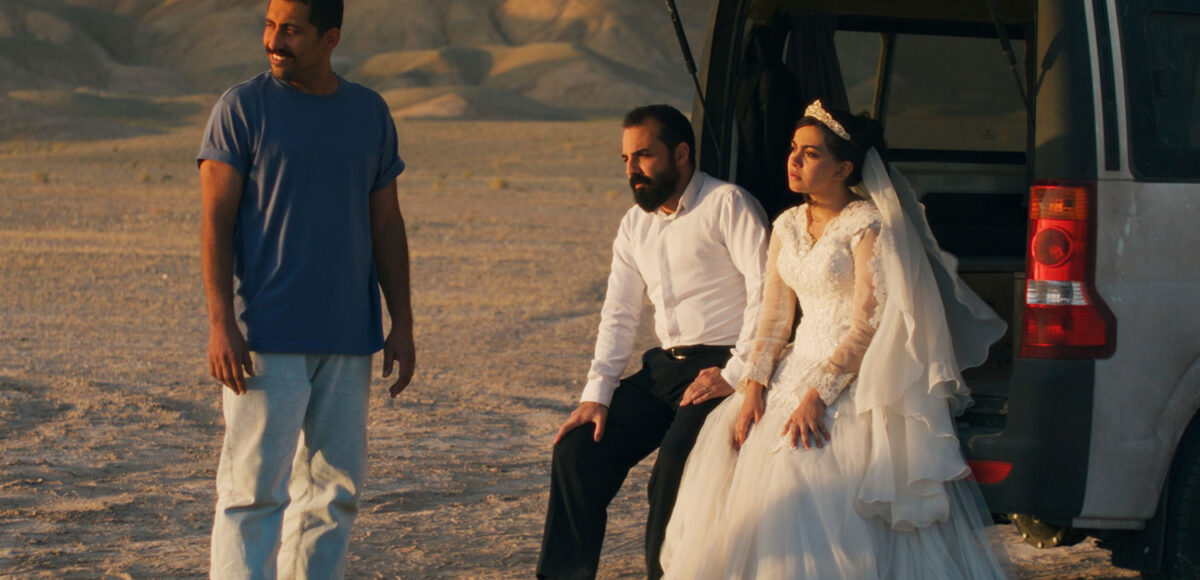
It’s late and the family is tired. Father (Ebrahim Azizi) is serious, focused and driving on a rough road at night when he hits something. Getting out, he discovers he has hit a dog. Nothing to do, he relates to his pregnant wife and young daughter, “It was just an accident.” Leaving the animal, suffering on the side of the road, he charges on, but the car has suffered damage and they must find a garage. As fate would have it, it’s the garage of Vahid (Vahid Mobasseri), who recognizes the man, or at least thinks he does, when he returns the next morning to pick up his car. Acting quickly, recklessly, Vahid attacks the man and bundles him into his van. Vahid is convinced that his captive is none other than Eghbal, the guard who relentlessly tortured him in prison. His prisoner denies it. Because he has some doubt, Vahid sets about collecting others who were also tortured by this man. He seeks revenge but must be certain it’s Eghbal, who had a wooden leg, also known as Peg Leg, very similar to the man he has kidnapped. Soon he has amassed Shiva (Mariam Afshari), recently released and newly employed as a wedding photographer, Golrokh (Hadis Pakbaten) and Ali (Majid Panahi), the couple she is shooting for their wedding the next day, and Hamid (Mohamad Ali Elyasmehr), the off the rails ex of Shiva, who is in favor of shoot first and don’t bother about the questions. Of all the members of this disparate group, it is Hamid who has no doubts that the man in the van is Eghbal by the sight and feel of his wooden leg.
Careening all over Tehran, discussing the pros and cons of revenge against their prisoner, who may or may not be the man who ruined their lives, it is Vahid who is either the moral compass of the group or the most indecisive. Where lies the humanity of extracting revenge? It is the combination of their zigzagging ride across town and into the desert, where they consider burying him alive and discuss the ethics of torturing their tormentor. For Hamid, there is no question that it is Eghbal, and no question that he should die, family or not. And this is where slapstick humor collides with the serious nature of revenge versus forgiveness. The occupants of the van, especially the future bride in full regalia, her precious wedding dress dragged through mud and dust, are almost a rollicking band of merry pranksters. Hamid, more over-the-top than the others, is resolute in his desire to kill the man he is certain is Eghbal, and leaves the group when they are still mulling over the philosophical implications of taking another life, regardless of his sins.
Complicating matters further is their encounter with his pregnant wife, about to give birth and in need of assistance, help that our not-so-merry band provides before they continue their life-and- death discussions. Promises are made; promises are broken. What can these innocent victims of Eghbal achieve when they abandon humanity and embrace his techniques? Who gets to choose who lives and who dies, and what do you lose in the process? Jafari ends the film in chilling ambiguity, an ending I will not reveal.
Whether the melding of genres amid philosophical questions works is an unanswered question. There are laugh-out-loud moments sprinkled with the horrors of memory and the dread of the future. Could it have been edited together more smoothly? Perhaps. Nevertheless, the questions at the root of this “man’s inhumanity to man” scenario are substantive and definitely worth considering.
In Farsi with English subtitles.
Now playing at the AMC Century City 15.
Neely Swanson spent most of her professional career in the television industry, almost all of it working for David E. Kelley. In her last full-time position as Executive Vice President of Development, she reviewed writer submissions and targeted content for adaptation. As she has often said, she did book reports for a living. For several years she was a freelance writer for “Written By,” the magazine of the WGA West, and was adjunct faculty at USC in the writing division of the School of Cinematic Arts. Neely has been writing film and television reviews for the “Easy Reader” for more than 10 years. Her past reviews can be read on Rotten Tomatoes where she is a tomatometer-approved critic.