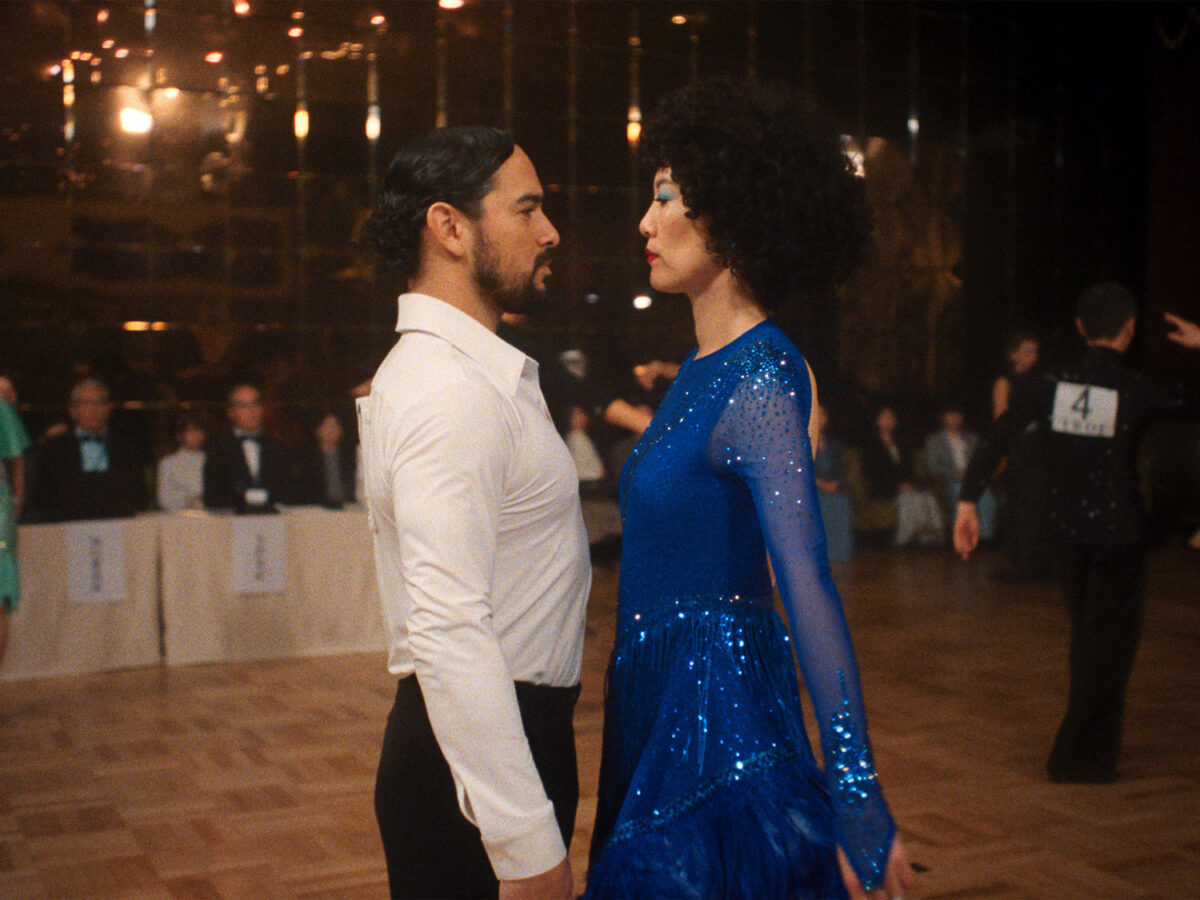
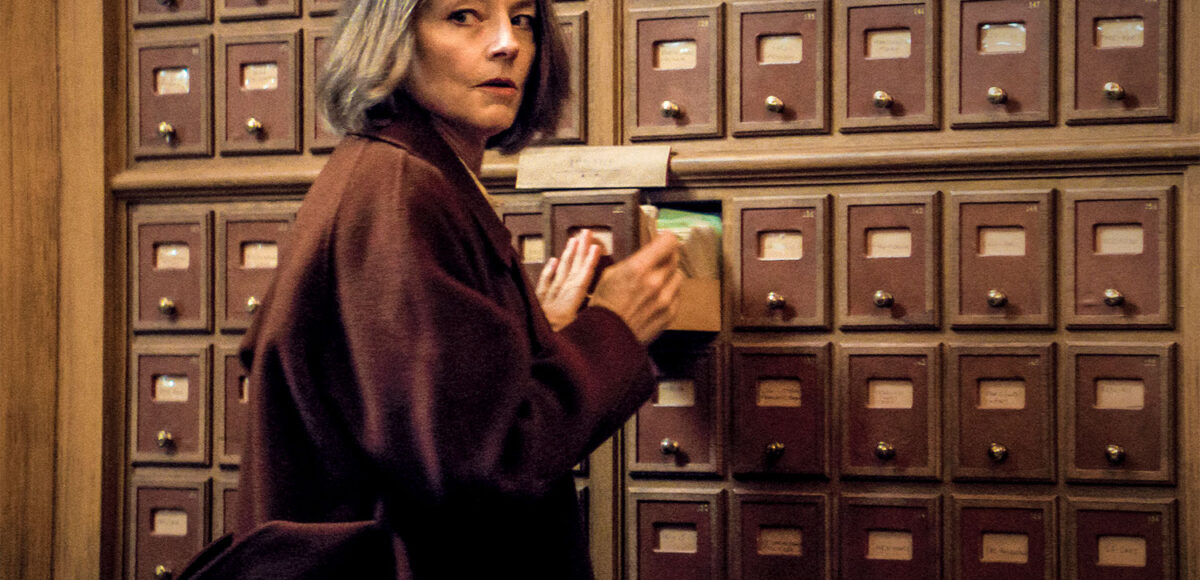

In “A Private Life,” Rebecca Zlotowski offers us not just a movie but a platter of comedy, psychodrama, mystery and character study. That not all of it works is not as significant as who she has cast in the leads, led by Jodie Foster in one of her only French-speaking roles. Foster, a native Angeleno, attended the Lycée Français, where she gained her fluency in French. Her accent is impeccable.
“A Private Life” is a multifaceted title referring not just to psychiatrist Lilian Steiner (Foster) who has compartmentalized all the parts of her life, but also to the patients in her practice. Certainly everyone has a private life, a life separated from the professional, the family and the inner self, but not all of them are quite as complicated as the many rigid lives of Dr. Steiner. A psychoanalyst, she tries to make her patients adhere to the times she has allotted them. Not pleased one evening when a client shows up unannounced, she reluctantly lets him in. He’s through, he tells her. He has been coming to her for many years in an effort to stop smoking and, until just last week, he still smoked. What did the trick, he tells her, was not her therapy but his visit to a hypnotist who cured him in one short session. Not only is he no longer in need of her services but he’s angry that his sessions on her sofa did him no good. Stoically, she reminds him that much more than smoking was discussed and that cures for specific ills are not guaranteed. Off he huffs, vowing never to set foot in her office again.
More problematic news follows when she learns that Paula, a longtime patient, has died. Lilian is floored. Attending the funeral, she is confronted by Paula’s outraged husband who, inexplicably, blames her. Leaving, she records his reaction. His guilt, she thinks, is misdirected at her. But she’s troubled. Tears begin to pour down the cheeks of the formerly implacable Steiner. This has never happened before and she is powerless to stop the flow, no matter the situation. Perhaps her ex, Gabriel, a leading ophthalmologist, can help. Examining her, he is amazed. “I think it’s the first time I’ve ever seen you cry,” he says. “I’m not crying,” she exclaims. “It’s my eyes that are.” He tells her that everything is normal. “Did something happen?” “No,” she replies. “Nothing special.”
Still, the tears keep coming. Paula’s daughter arrives with the information that Paula’s death was a suicide using the pills prescribed by Steiner. Though she can submerge her feelings, she cannot stop the tears. She continues to see patients; her tears continue to flow. Frustrated to the point of exhaustion, she does the unthinkable and visits her former client’s hypnotherapist, Jessica, a woman who specializes in Ericksonian hypnotherapy, where focus on the present is given precedence over Freud’s self-exploration of past events. Remarkably, Jessica tells her she can’t stop her from crying because something within her needs to cry, needs to be in mourning. What she will do, however, is take her back to the past; open a portal to a past life that might give credence to what she’s feeling. Skeptical, Lilian allows Jessica to hypnotize her, and what she finds in this imagined past is remarkable, opening something within her, symbols that may have representations in her present.
Lilian clings to the past life portal that has been opened, finding in it another way to dismiss the here and now. Remarkably, the tears have stopped. Now she must unravel the death of Paula, convinced she couldn’t have missed the symptoms. Listening to one of Paula’s taped sessions, she discovers a possible hint to her death, a secret that Paula kept. She must have been murdered. Meeting Gabriel for dinner, she enlists him as her partner in solving what she is certain is a crime. She becomes more convinced than ever that foul play is involved when she returns home to find her office ransacked and the critical tape of Paula’s last session missing.
It is at this point that Zlotowski’s film veers away from psychodrama and into the realm of the slightly wacky, as Gabriel and Lilian follow what they think are clues to what Lilian is convinced is a murder, drawing them closer together than they have been in years. At this point the film has a slight “Only Murders in the Building” tone that might have worked a bit better if it hadn’t been a complete left turn. Nevertheless, this departure from the somber opens up the character of Lilian, who up until now was what one might politely call a stiff. The challenge of the chase, underscored by the weird past life scenario, serves to allow Lilian to relate more humanely to those around her, especially her much maligned son and the grandchild whose mere presence makes her wince. Zlotowski’s intent is to present Lilian as a new woman, less self-involved and more willing to deal with the ambiguities in her own life.
Zlotowski, both as director and co-writer with Anne Berest, was, perhaps, a bit overly ambitious. The various turns in tone and subject matter don’t always work but, if you stay with it until the end, the character development of Lilian Steiner from therapist to human being is quite satisfactory. Helping enormously is the amazing cast she assembled. Jodie Foster, a four-time Academy Award nominee and two-time winner, is remarkable as Steiner. A still-beautiful woman, aging gracefully, the lines etched along her mouth attest to years of stress and no release, characteristics endemic to this physician. Foster is able to convey tension and coldness in her posture as well as her eyes. She is a marvel to watch and would be reason enough to see the film.
But Foster isn’t the only stellar member of this cast. Daniel Auteuil, star of countless iconic films and an icon himself, plays Gabriel, Steiner’s husband. His warmth offsets her froideur; their chemistry is palpable. Nominated for 14 César awards (the French Oscar) and winner of two, he lends importance to any film in which he appears and he is one of the reasons to stay with this one. Virginie Efira, a César winner for “Revoir Paris,” plays Paula and capitalizes on the mystery of her character, making a big impression with the little screen time she has.
Mathieu Amalric, familiar to American audiences for his roles in “Munich” and “The Grand Budapest Hotel,” is a 10-time César nominee (for writing, directing and acting) and three-time actor César winner, playing Paula’s surviving husband Simon, his anger and sadness colliding effectively into explosiveness. A favorite of mine is Vincent Lacoste who plays Steiner and Gabriel’s son Julien. His realistic disappointment can be read all over his being, engendering sympathy as the neglected son of a troubled mother. A César winner for “Lost Illusions,” you would do yourself a favor to see this exquisite film (streaming on Amazon). Sophie Guillemin plays Jessica the hypnotherapist with conviction and Frederick Wiseman, a highly regarded documentarian and French favorite, is Dr. Goldstein, Steiner’s former professor, now colleague, whether he’s willing to admit it or not. The nonagenarian Wiseman approaches his role with a well-earned twinkle in his eye. Don’t miss his outstanding documentary “Menus Plaisirs – Les Troisgros” on PBS Passport.
Editor Géraldine Mangenot keeps the flow continuous even when the tone changes and cinematographer George Lechaptois makes his relatively dark palette find depth as the film takes a film noir turn.
Any reservations I have, and I do have them, relate to the choppy way in which Zlotowski changes the tone. Veering from personal crisis to a somewhat ineffective film noir homage, she then segues into a rather unconvincing farcical-mystery investigation. She finally arrives at a satisfying, if too hasty, romantic-comedy reconciliation between Steiner and her ex. The parts never completely coalesce into a whole. Although primarily a character study of the psychiatrist, in lesser hands, Steiner’s personal rehabilitation would not ring true, but Foster, the consummate actor, makes it believable.
In French with English subtitles.
Now playing at the Laemmle Royal
Neely Swanson spent most of her professional career in the television industry, almost all of it working for David E. Kelley. In her last full-time position as Executive Vice President of Development, she reviewed writer submissions and targeted content for adaptation. As she has often said, she did book reports for a living. For several years she was a freelance writer for “Written By,” the magazine of the WGA West, and was adjunct faculty at USC in the writing division of the School of Cinematic Arts. Neely has been writing film and television reviews for the “Easy Reader” for more than 10 years. Her past reviews can be read on Rotten Tomatoes where she is a tomatometer-approved critic.