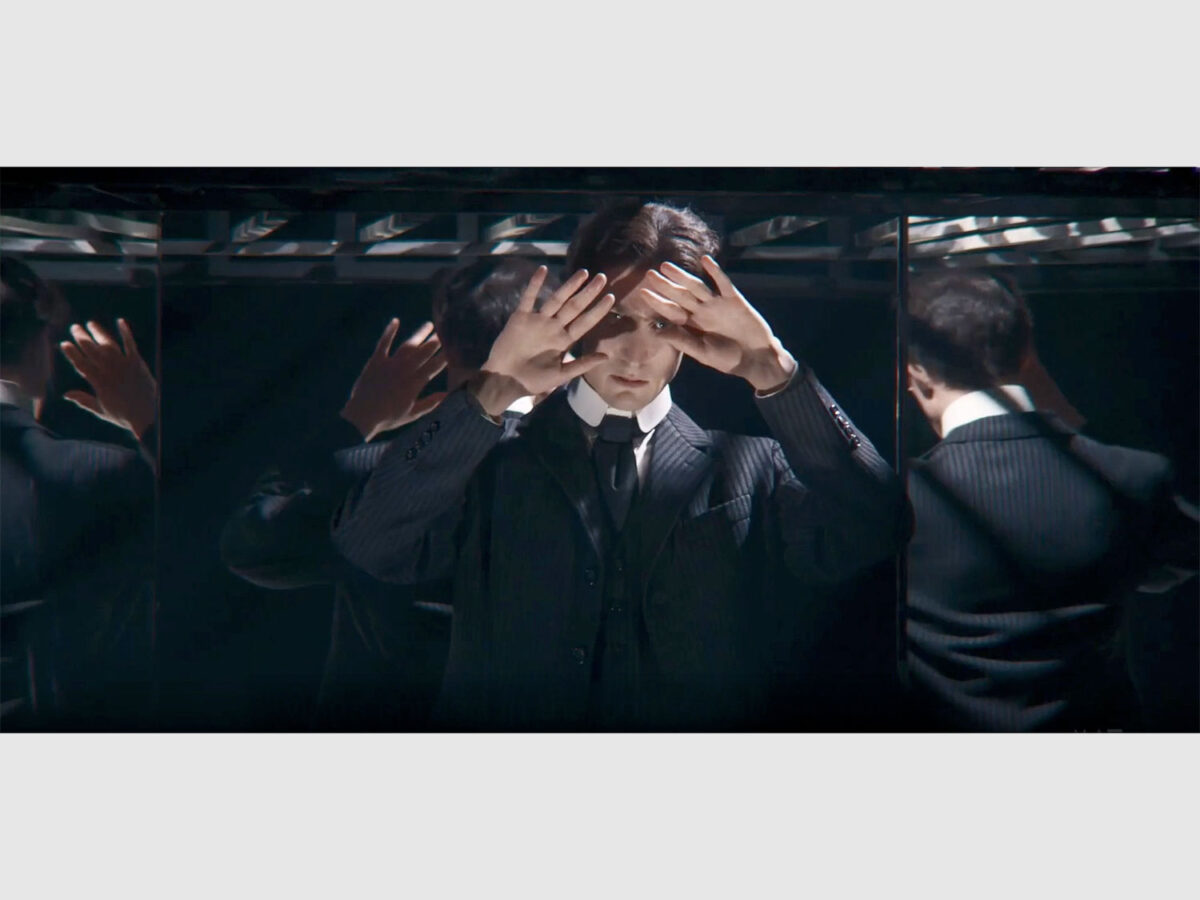

The title of Josef Kubota Wladyka’s new film, “Ha-Chan, Shake Your Booty,” is as absurd, funny and joyful as this ridiculous title would imply. Although I hated the title, I loved the movie and think you will too when you let down your guard and succumb to the charm of this eccentric film about love, grief, loss and inappropriateness told in chapters. Characters break out in spontaneous song and dance at the least expected moments, moments that are as much about fantasy as they are about the wishful thinking of the here and now.
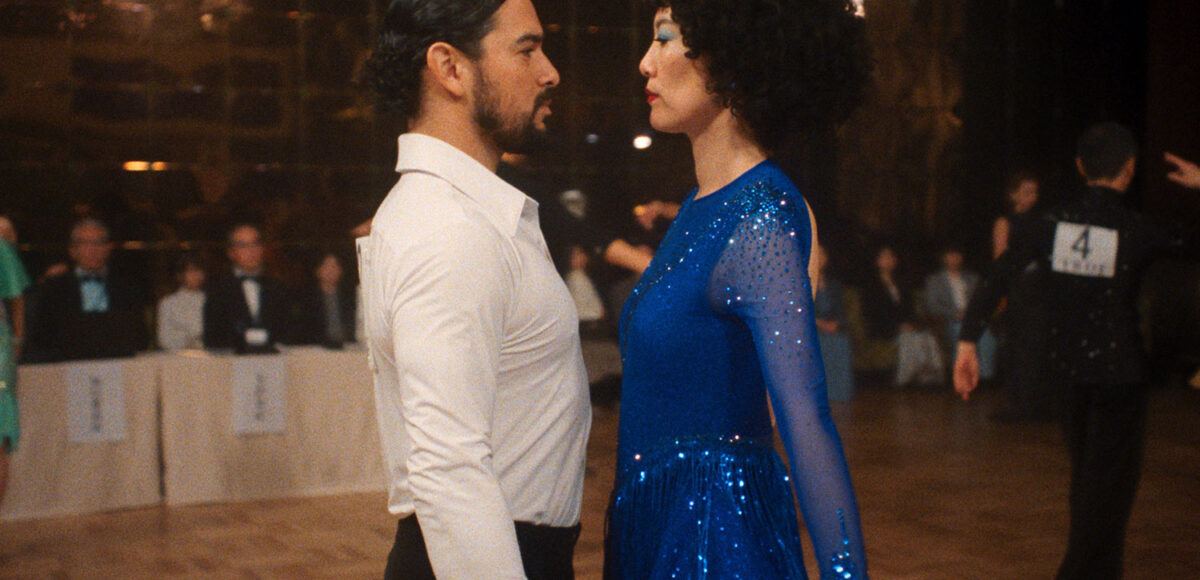
Haru (nicknamed Ha Chan) lives a privileged existence in Tokyo. Her home identifies her wealth with its many large rooms situated within gates that surround her expansive garden. Her loving husband Luis whets her appetite with his hybrid Mexican-Japanese dishes before they settle in for their nightly rhumba practice sessions in the salon that contains their massive vinyl record collection. Food, music and dance are their love songs. Her angelic face is topped with a curly mop reminiscent of a cross between the comic character Annie and Angela Davis in the ‘70s. Her long legs, wrapped in fishnets that complement her slinky, brightly-colored sheaths are an integral part of her dancing persona. She and Luis are ballroom dancing competitors and their latest contest is coming up.
Picked up by their white-gloved driver, they arrive at the hotel ready for their final preparations. It is Luis who coaxes Haru off the edge of anxiety, letting her know that she is ready and he is there to guide her. Their eyes tell you everything you need to know about their relationship as they arrive on the dance floor. Slowly, smoothly guiding her through the initial rhumba of love, they come together in an embrace that carries them above the others, literally and figuratively, in a magically real moment until, tragically, they fall to earth. Luis has collapsed on the floor, struck by a fatal heart attack. He may be the one who has died, but it is Haru whose life ends on that dance floor, lost without him.
Preparations begin for his kotsuage, the cremation ritual that will send his spirit to the heavens above. Luis’s father Jacobo and sister have flown to Tokyo from Mexico and have a last request—they would like to return his body to be buried where he was born. Haru is horrified. Doing so would upset Japanese tradition and, worse, bury him in a prone position that would prevent his spirit from arriving in the afterlife standing tall. Convinced that Luis would be unable to rest, Haru is distraught. Her compassionate sister, Yuki, convinces her that allowing Jacobo his wish is the right thing to do.
Her loss sends Haru into a massive depression. Housebound for nine months, she refuses to attend the birthday party that Yuki and Hiromi, their wild cousin visiting from New York, have thrown for her. Hiromi, with her partially dyed tresses and eternally foul mouth, has decided enough is enough and is determined to forcibly release Haru from her self-imposed exile. They demand that she join them at the new dance studio that has opened and immerse herself in the cha-cha-cha with the sexy new instructor Fedir, another gorgeous Latin who won fame on “Dancing with the Stars.” Watching Fedir, all facial angles lovingly captured by the camera, almost prowl in slow motion, toward the women and the studio, his tight shirt revealing the tantalizing hint of tattoos over perfectly toned biceps and his dancer’s slacks loose in the legs and clinging seductively to his glutes, something in Haru reignites. Dance it shall be if it brings her closer to this ideal of a man and her complicated rekindled “needs.”
Complicated it is, not only because Fedir is in an open marriage with his often absent dancing partner Mila, but also there are the unresolved issues of Luis, still floating between this world and the next, often appearing to Haru in the shape of a crow. Just because this large, feathery crow looks like a giant black Tweety Bird does not make him any less real to Haru, especially when he removes his crow’s head and reveals Luis, ready to hug Haru lovingly. His spirit is still earthbound and Haru is reluctant to let him go.
Her visions of Luis are not the only ones keeping her caged between reality and her fantasy world. Flirting with Fedir, she imagines him her savior. Boldly asserting herself, she asks him out to dinner. On the way home, she is rudely jostled by some drunk salarymen on their way to the train. Fedir demands that they apologize and this starts a choreographed daydream sequence where he defends her honor by physically conquering all four men. It ends in a choreographed Latin-infused dance number with Fedir in front, the men and a dozen bystanders behind him in support, akin to the scene in “La La Land” where the protagonists, frustrated by the traffic, get out of their cars and dance amidst the stalled cars and blue L.A. skies, seemingly real but without question a fantasy solution to a mundane problem.
Can Haru continue to float between the real, the imagined and the desired? Well, of course she can but getting there is all the fun, because as Hiromi often says, “Life is messy.” Will Haru be able to embrace “Messy is good?” Will she be able to let Luis go even as she embarks messily and inappropriately with Fedir? This isn’t a spoiler, but of course she can and will, it’s just the getting there that will entrance you.
Wladyka, writing with his close friend Nicholas Huynh, wanted to make something that would embrace the lessons learned from his ballroom-dancing Japanese mother who raised him and his two brothers as a single mom near Washington, D.C. No matter how difficult things got for them, she embraced the messiness of life and the joy that dancing brought to her spirit. It’s not a dance film, but it is all about the many ways dance can embrace and heal. Wladyka was fortunate in the cast he found. As a television director, he had worked with the stunning Rinko Kikuchi on the HBO series “Tokyo Vice.” Her ability to capture a scene with her eyes served her well as Haru. It is impossible not to look at her. Her loves, sadness and ultimately unrequited lust all deepen her character.
The two Mexican men of her dreams, and both are in her dreams, were actors he worked with on “Narcos: Mexico.” Ironically, both played drug villains of the darkest sort and yet here, Alejandro Edda (Luis) revealed a warmth and depth that anchored the film long after he “disappeared.” Alberto Guerra (Fedir) brought believability and sympathy to the dance teacher with the discerning, albeit roving eye. Who wouldn’t be in love with them both? Her sister Yuki, played by Yoh Yoshida, and cousin Hiromi, played by You, respectively, are in Freudian terms, the superego and id to Haru’s ego; or in the Looney Tunes version, the angel on one shoulder and the devil on the other. You gets the best, often profane, lines and has the most fun, but Yoshida is an engine that keeps the narrative moving forward.
The score is jam-packed with Japanese covers of ‘80s and ‘90s songs but listen especially for songs associated with “Dirty Dancing,” a touchstone for this film. A cover of “Be My Baby” by the Ronettes figures prominently.
This delightfully messy and chaotic film is difficult to describe but exceptionally fun to watch, especially for something that is primarily about grief in its various permutations. See this one for everything it has to say about life and what it leaves for you to personalize.
Opening Sept. 25 at the Laemmle Royal, the AMC Universal CitiWalk and the Regal Sherman Oaks Galleria.
Neely Swanson spent most of her professional career in the television industry, almost all of it working for David E. Kelley. In her last full-time position as Executive Vice President of Development, she reviewed writer submissions and targeted content for adaptation. As she has often said, she did book reports for a living. For several years she was a freelance writer for “Written By,” the magazine of the WGA West, and was adjunct faculty at USC in the writing division of the School of Cinematic Arts. Neely has been writing film and television reviews for the “Easy Reader” for more than 10 years. Her past reviews can be read on Rotten Tomatoes where she is a tomatometer-approved critic.