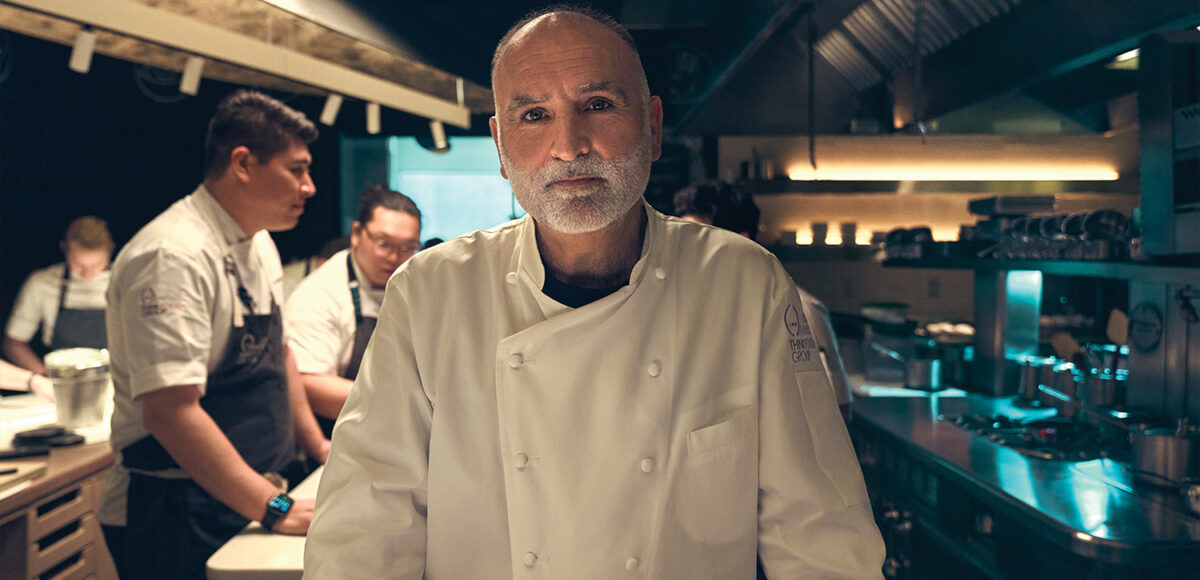

The 10th season of the acclaimed Netflix series “Chef’s Table” (aptly subtitled “Legends”) focuses on transformative figures on the culinary landscape. The second episode, which aired this spring, opened with this voiceover:
“In the last 20 or 30 years, a small handful of people changed how we look at food.”
The narrator then proceeds to cite the late Anthony Bourdain and René Redzepi of Noma.
“And then you have José Andrés,” the voice adds.
“José is a maximalist. On one side, you have the chef who has established a small empire of incredible restaurants, in essence bringing Spanish cuisine to the U.S. And the other side, you have a guy entirely dedicated to World Central Kitchen, a nonprofit organization wanting to feed the world. It’s totally unreasonable to try to do both those things at the same time, but José wants it all.”
Indeed, if the Spanish-born Andrés’ life was a movie title, it would be “Everything Everywhere All at Once.” And the local restaurant scene played a supporting role in the Andrés success story.
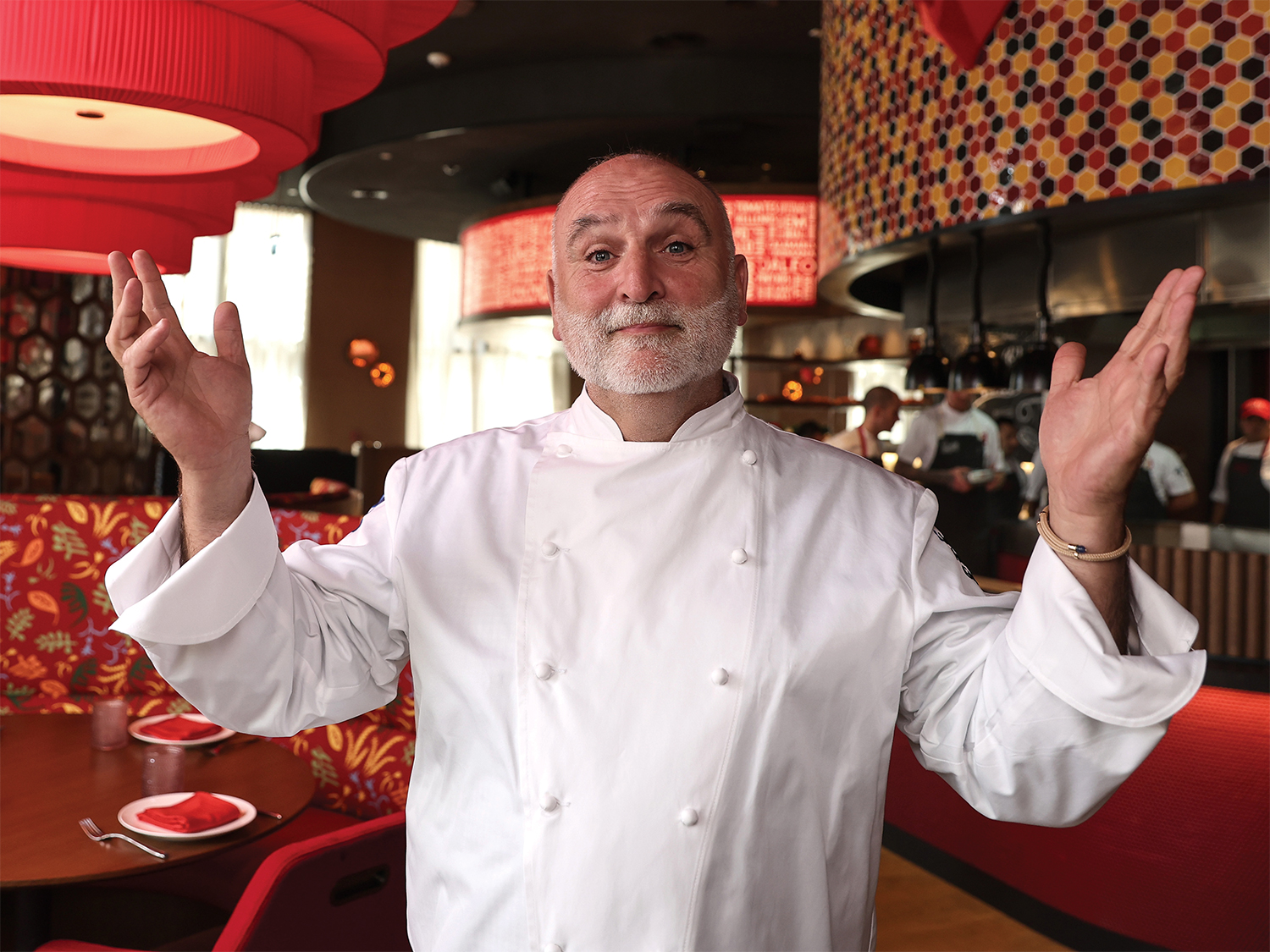
Photo courtesy of the José Andrés Group
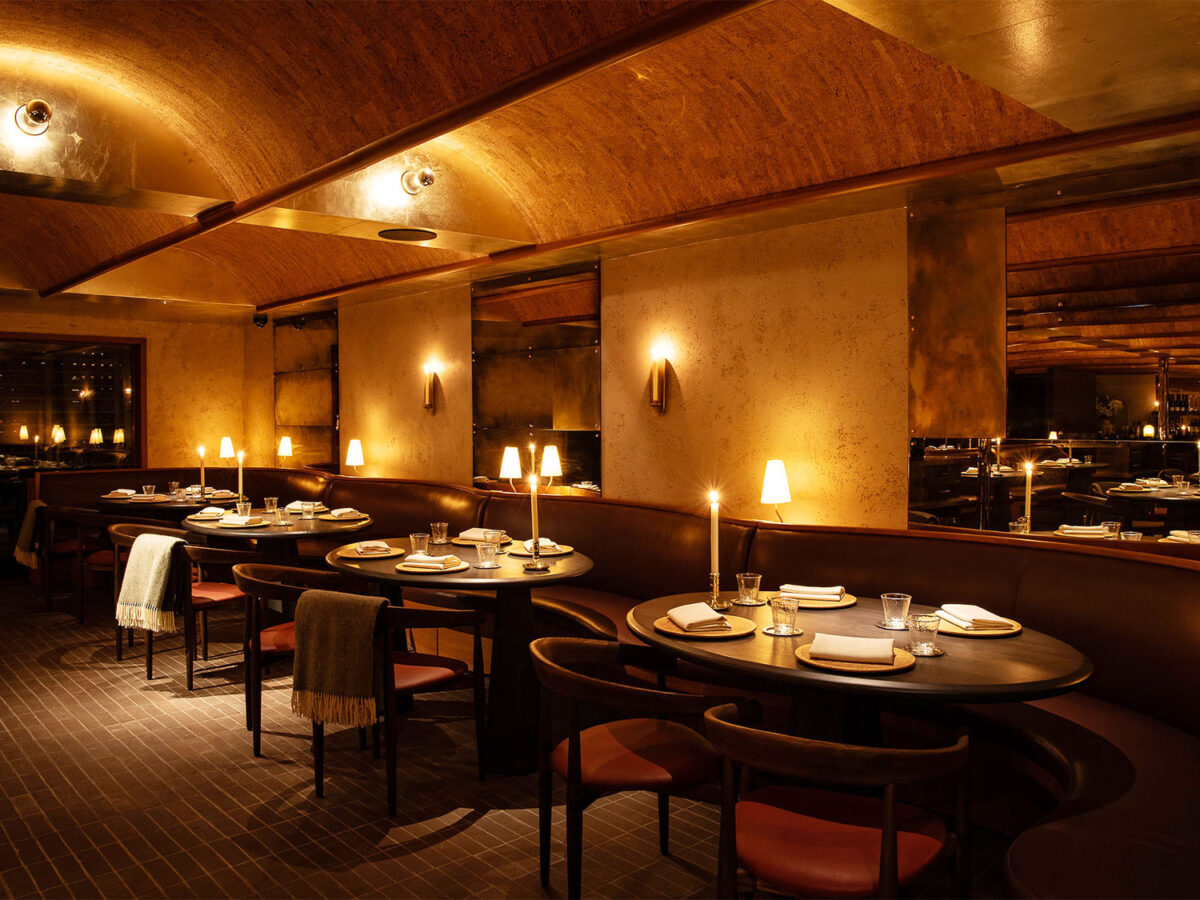
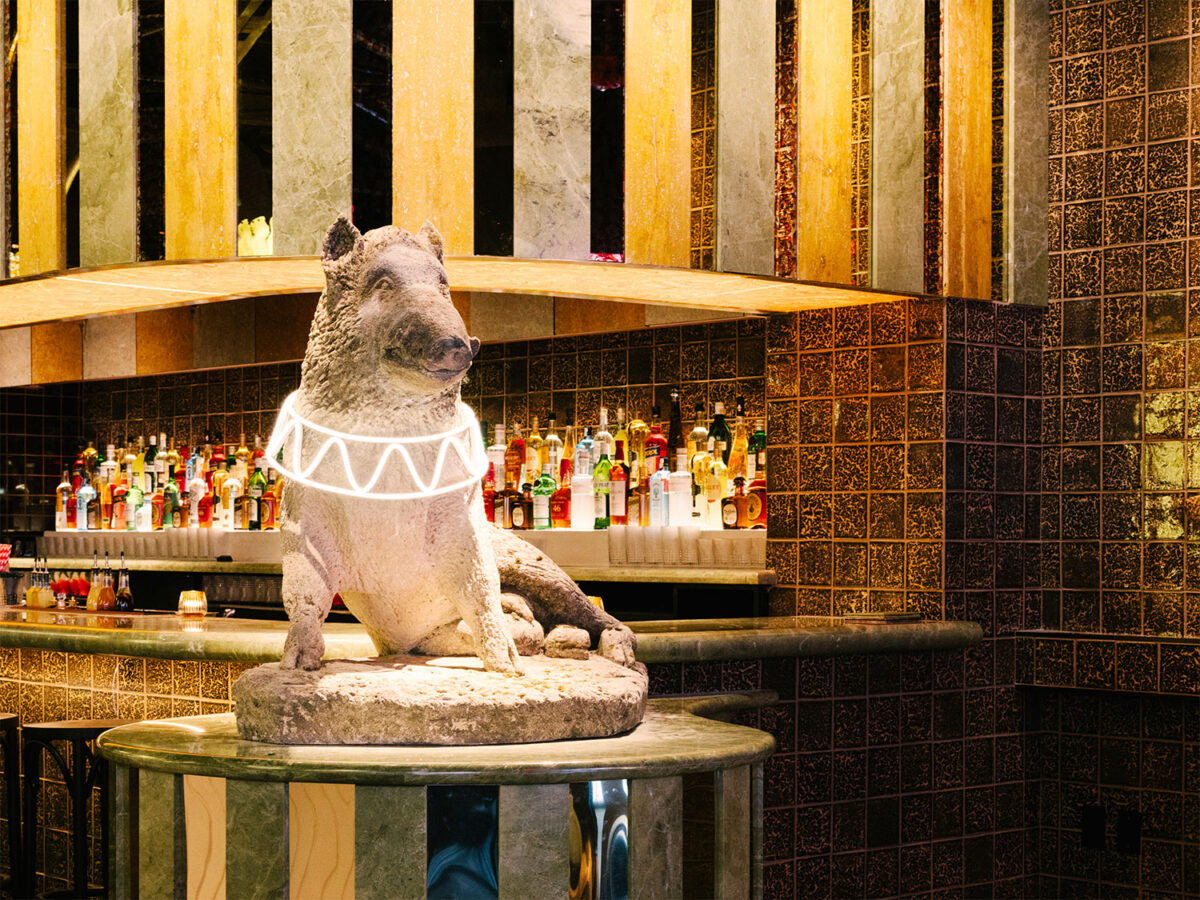
In 2008, the chef opened The Bazaar by José Andrés at the SLS at Beverly Hills on La Cienega Boulevard. The ground-floor venue, in a space designed by Philippe Starck, quickly rose to superstar status with its Spanish-influenced take on modernist molecular cuisine. Among its many accolades were four stars by the legendary Los Angeles Times food critic S. Irene Virbila and a place on the top 10 new restaurant list by GAYOT. A separate tasting area, which became Somni in 2018, garnered the chef his first two Michelin stars. Though both restaurants closed in 2020 after a consulting agreement dispute, the Andrés legacy—and that of The Bazaar—remain a powerful force in greater Los Angeles.
Andrés, of course, is a powerful force globally, as well.
His José Andrés group oversees more than 40 restaurants, one of which holds two Michelin stars, with several others accorded Michelin Bib Gourmand awards. Andrés is a New York Times bestselling author, James Beard Foundation Award-winner, Emmy-winning TV personality, entrepreneur and prolific communicator. His three-year-old Substack newsletter, “Longer Tables with José Andrés,” regularly regales close to 90,000 followers (whom Andrés calls “Food Fighters”) with uplifting stories, culinary tidbits, recipes and profiles. Topics this past summer ranged from the wonders of the Cap de Creus lobster of the Costa Brava to a primer on Mexican Merlot. The content, brought to life by National Geographic-worthy photos, weaves together a central theme: that every meal has the power to change the world.
It’s a through line of Andrés’ work.
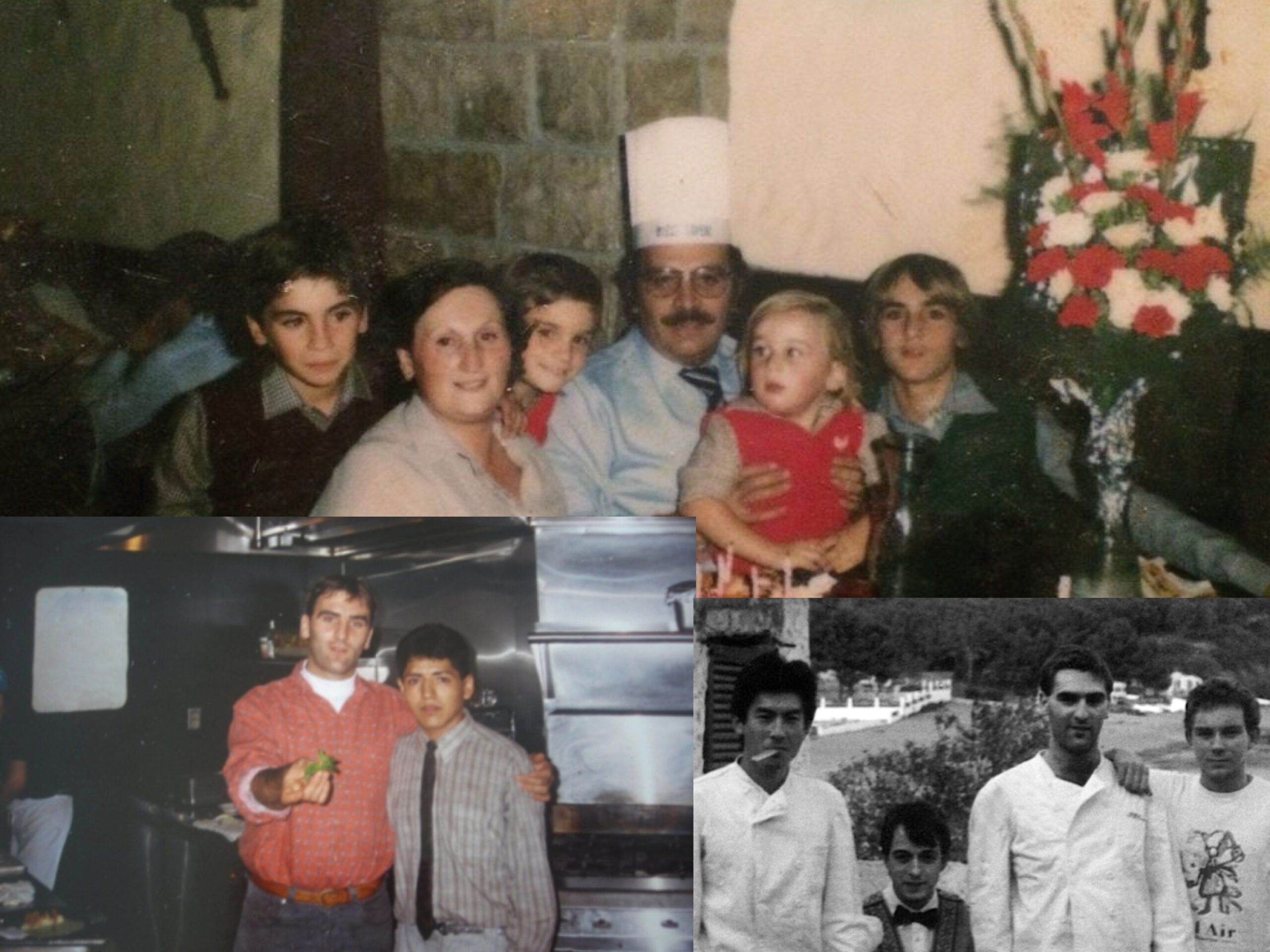
Left: José with Rodolfo Guzman at Jaleo circa 1994
Right: José (third from left) in his early years at El Bulli
Photos courtesy of the Andrés family
In 2010, he launched the nonprofit World Central Kitchen (WCK) after a devastating earthquake struck Haiti. In the 15 years since, WCK has become synonymous with frontline emergency food relief during disasters both natural and man-made. Known for quick, nimble action and the ability to adapt on the ground, the organization has provided a food lifeline to hundreds of millions around the globe. Its teams are currently braving danger to provide ongoing aid in Ukraine (287 million meals provided thus far) and Gaza (147 million meals). Earlier this year, Andrés joined WCK relief workers mobilizing after the Southern California wildfires. More recently, WCK teams sprang into action after the tragic flooding in central Texas.
For his actions, Andrés has thus far been recognized with a National Humanities Medal, Presidential Medal of Freedom and Nobel Peace Prize nominations in 2019 and 2024.
His humanitarian efforts also extend beyond WCK. In 2023, Andrés launched The Longer Tables Fund, whose mission is to address “urgent issues in food systems, social justice, and education and advocacy, while uplifting communities.” In the same year, he founded the Global Food Institute at George Washington University, a multidisciplinary think tank to address food insecurity, food systems solutions, and in essence, seek solutions to the world’s problems through the lens of food.
At the same time, the roster of Andrés’ endeavors continues to expand.
This spring, he co-hosted a culinary cooking competition show on NBC with Martha Stewart called “Yes, Chef!” He also published “Change the Recipe: Because You Can’t Build a Better World Without Breaking Some Eggs.” Billed as a collection of life stories and lessons, it reads like a tapas menu of wisdom gleaned from experience (“You Don’t Need Everything to Be Happy,” “Move Forward Fearlessly”). Recollections range from his boyhood in Barcelona, savoring the simple dishes of his mother; to his days as a cooking school student and later as a chef at El Bulli, the transformative Catalan restaurant named the world’s best several times over; to a stint in the Spanish Navy; to the launch of his first restaurant, Jaleo, in Washington, D.C.
Though some of the book’s chapters are scant in size, they’re profound in message. One chapter begins, “Cooking makes us human. It’s what separates us from every other animal on the planet. There’s good reason to think that cooking helped our brains grow, to develop sophisticated language and to grow community.”
One community in particular—Los Angeles—holds a special place in Andrés’ heart, as I learned during an interview with him earlier this summer. He was half a world away in northern Spain, but eager to speak about his role in LA and its importance to his personal story.
Though our meeting was virtual, via Zoom, the chef’s larger-than-life persona had no trouble breaking through.
“Yo no hablo inglés,” (I don’t speak English) he proclaimed in a booming voice as he switched on his camera.
“Yo hablo español!” (I speak Spanish!), I replied, although I had assumed the interview would be in English. It was, with the chef occasionally giving instructions in Castilian Spanish to those around him. Every now and then, he would puff on a cigar before responding to my questions.
I began by asking about his first venture into the City of Angels.
Courier: Chef, we know the José Andrés name as a global brand today. But not everyone realizes how important Los Angeles was to your early success. You launched The Bazaar here in 2008 as your first expansion outside of your home base of Washington, D.C. Tell us about that experience, which was groundbreaking in many ways.
Andrés: It was, and I was very thankful to Sam Nazarian, the founder and owner of sbe and his family. To me, they’re family and friends. Sam was a very young man, looking for somebody to open his first hotel on La Cienega in Beverly Hills. And probably it’s always better to let others say this, but I have a feeling that what we did in the hotel was a breakthrough. I will be in eternal gratitude to Sam Nazarian, his family, his company SBE and his team to give me the chance to join Philippe Starck to show that hotels had room for creative improvement. We created one of the most amazing food-restaurant experiences. I think what we did at Bazaar was a ‘before and after’ in the understanding of how restaurants could be amazing food, amazing service but also highly original and entertaining all at once.
Courier: You now have a presence in downtown Los Angeles, with the Spanish restaurant San Laurel at Conrad Los Angeles. That hotel is part of The Grand LA, the mixed-use project designed by Frank Gehry across from the Disney Concert Hall. Is it true that Gehry walked you through that space and encouraged you to open there?
Andrés: Well, yes, all the above. Frank Gehry for me has been an icon. I met him many years ago. Frank Gehry is very obviously a visionary who has done so much, not only for LA but so many communities in America and around the world. Not so young anymore, but he’s still strong. He had such a passion for what he wanted to do there, explaining what he envisioned for that part of town that everybody agrees needs to become part of the greater LA. But when I met him, we were already committed. And it is not the only work I’m doing at the Conrad; we have already built a Bazaar there, too.
Courier: That’s my next question. Can you tell us about the plan to open an outpost of Bazaar Meat at The Grand LA? That concept has been very successful in Las Vegas and Chicago as a ‘celebration of the carnivorous.’ What will this LA version be like, and when will it open?
Andrés: It’s already built, but we need to be smart, and we are waiting for the right time between our friends and partners. But the restaurant is fully built. It’s right under the hotel. It’ll be Bazaar, which has been moving into Bazaar Meat. It will have the spirit of the original Bazaar, with traditional dishes and modern dishes. More focusing on meats that move away from steak, but steak, too, and obviously, fish and vegetables. People seem to want, and we’ve been having a lot of success with fish. We call it Bazaar Mar. We probably will end up opening Bazaar Green, which will be vegetables. But again, LA gave me this opportunity to be creative in probably one of the most creative cities in the world without a doubt.
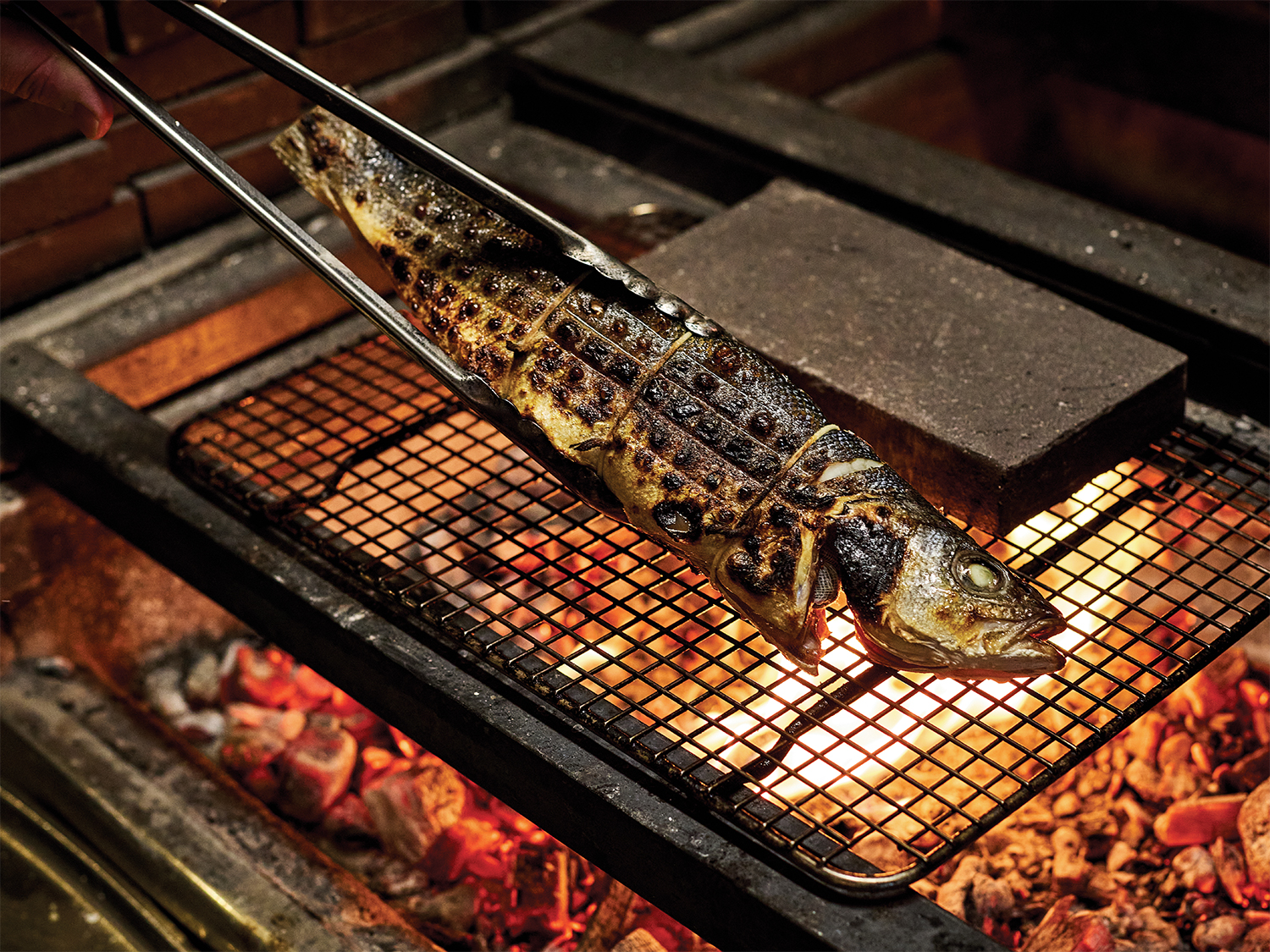
Photo by Katrina Frederick
Courier: In the last year you have also expanded into Culver City at the Shay Hotel. You have Zaytinya there, which follows in the Mediterranean footsteps of its namesake in Washington, D.C. You have also opened the Mexican-inspired Butterfly on the rooftop. You seem to gravitate toward hotels. Is that part of your strategy?
Andrés: I love hotels. In D.C., all my restaurants except The Bazaar in the Waldorf Astoria are stand still restaurants, but that is my home where I live. When you go to cities, it is good to be in the comfort of a home, and a hotel is a home away from home. There is great synergy with hotels and malls. We have some projects where we don’t have to carry the heavy burden of the investment. And in a way it’s a win-win. I did two big investments in New York with Mercado Little Spain and in Disney Springs with Jaleo. I opened the two biggest food enterprises representing Spain in the world right before the pandemic. When the pandemic hit, I’m like, ‘Oh my God, I have all these spaces, this big investment.’ And you need to adapt to the situation and make the best out of it and create an even bigger opportunity. So, this expansion into hotels and a few malls that are up to the standards and quality I’m looking for makes all the sense in the world, and that’s what we are doing.
Courier: You have experienced great success in LA over the years. What comes to mind when you think about the overall dining scene in LA right now?
Andrés: It’s a city called Los Angeles (the angels) with ancestry from Spain and Mexico and all those Spanish and Latin influences. It’s a very cosmopolitan place in a way. And I have to mention people who came from being my teammates in Bazaar that now own their own restaurants. Somni used to be my restaurant. We opened inside Bazaar LA, and the name was my gift to one of my team members who wanted to be on his own like I did when I was young.
[Author’s note: That team member, chef Aitor Zabala, opened a reimagined Somni (the Catalan word for ‘dream’) in West Hollywood in 2024. Earlier this year, it became the first restaurant in LA to earn three Michelin stars.]
Andrés: It gives me a lot of joy that now Somni becomes its own dream, and in a way, I feel a grandfather of those three stars of Somni. I mean, it took him a long time and perseverance. But obviously, Aitor is one of the most talented chefs, not only in LA, not only in America, but in the world. And so, people like Aitor and Somni show us that the power of the will can move mountains.
Courier: There are other veterans of The Bazaar who have also gone on to make a name for themselves, right?
Andrés: Yes. Joshua Whigham also was with me many years. He was chef at Bazaar. I’m so proud that now he has his own restaurant [Casa Leo in Los Feliz]. Joshua is amazing. And the Voltaggio brothers, especially the chef Michael Voltaggio, who was my opening chef at Bazaar when we got the four stars in the LA Times. I remember when Mercado Little Spain got a huge review in the New York Times, too. I’ve been getting through my life a lot of three or four stars in reviews. And that doesn’t mean we are perfect. We also had our shortfalls. Everyone understands that in the restaurant business, you are only as good as the last plate. But for me, talking about a chef who came from Bazaar gives me a lot of joy, and I can keep giving you more names. Not to praise me or Bazaar. It only tells you that it’s a team that keeps investing in each other. And that’s how you create the city.
Courier: In addition to those former teammates of yours, what other chefs do you think are doing the most interesting work here in LA?
Andrés: Obviously, I’m a big fan of Roy [Choi, the chef who launched the Korean Mexican taco truck concept, Kogi]. What he’s done, the food trucks, he’s created the system of making good food more democratic and able to reach everybody. Not only in a high-end restaurant or a fancy restaurant, but even in the streets. People like Roy bet that food trucks could bring good food to people who would not go to a restaurant. That’s only LA. Also, the guys of Eggslut in that market [Grand Central Market]. You go there, and it looks like, what the heck is going on? You don’t know if you want to quit and run away. But once you become part of it, you may be a foreigner or tourist in LA, but all of a sudden you become a local, even if you are only there one day. And to see what Eggslut and its founder—he’s amazing—to see those lines, to get the egg sandwich, breakfast sandwich, oh my God.
I mean LA is a small country, man. The bounty of things is just unbelievable. And influences. And that’s very powerful. Just look at the farmers’ markets where my guys go and buy things that are iconically seasonal. You keep going and going from the best breads and pizzas by Nancy Silverton to the Mexican restaurants and the great molés you can find. And the Japanese places like Sushi Zo, which is one of my favorites. I remember when I brought [El Bulli’s] Ferran and Albert Adrià for the first time to LA. We went there, and we went for lunch early, and we finished. And before they closed, we told them, ‘Can we do a second lunch?’ And the quality of taco places and the quality of Arab Muslim food and the quality of Jewish kosher Israeli food and the quality of Persian food.
But LA to me, you have in LA a guy like Seamus Blackley, the founder of Xbox, who was crazy enough to make bread from scratch with ancient yeast. He’s able to create the best chocolate bar in the middle of LA with trees he’s growing in LA. I mean, this guy may be one of the best creative minds and engineers in the world. And in his free time, he’s able to make the best loaf of bread. And on top of that, being so generous that he shares that technique with everybody. You have a guy that has nothing to do with cooking, but he’s teaching even people like me how to make the best loaf of bread, create your own natural ferment and yeast from scratch. That’s LA.
Courier: LA went through a terrible period early this year with historic, wind-driven wildfires. I understand you had a personal reason for coming out to help the WCK teams on the ground.
Andrés: Usually, I take time away from my business and from my family for World Central Kitchen in big events. And big events are Category 5, where millions of people are impacted. Because if not, I will be 24/7 working on World Central Kitchen. And I still have to work. I mean, World Central Kitchen is not my job; it’s my hobby. It is my giving back to the community. But seems it’s taking more time of my private life and my business than I ever imagined or expected. And I’m very proud of it. But on paper, I was not going to go to LA. I was in a taxi on my way to Europe to take the plane. I got news that my friend lost his house. He texted, ‘José, my house burned down. My entire neighborhood burned down; my church burned.’ And in that moment, I stopped the taxi, I went back home, I put my golf clothes and my ‘having fun’ clothing away. And I took my World Central Kitchen bag, and I was on my way to LA to join teams that were already feeding people.
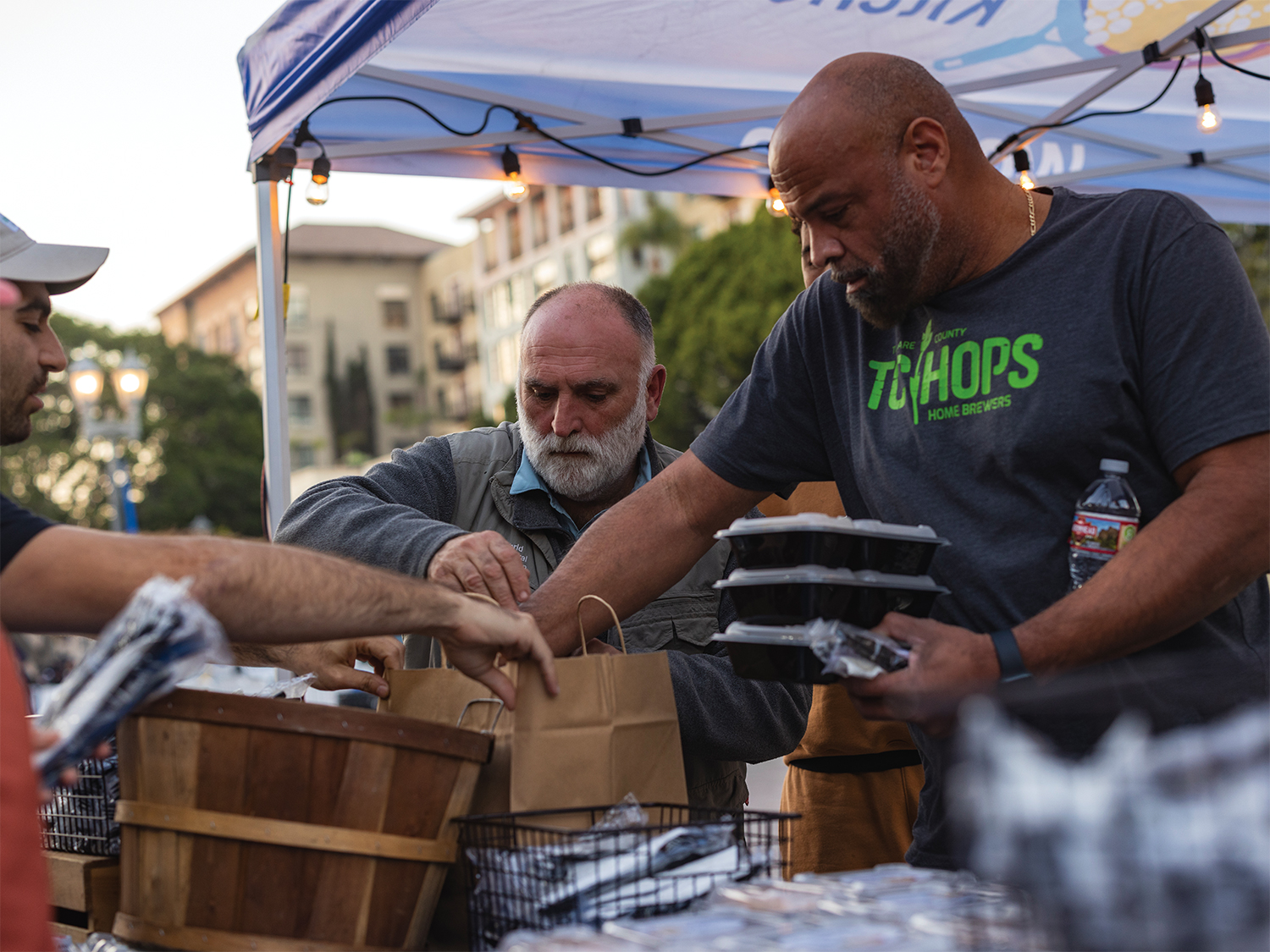
Photo courtesy World Central Kitchen
Courier: Can you tell us what the experience was like and was there anything special about the way that Southern Californians responded to the disaster?
Andrés: In the worst moments of humanity, the best of humanity shows up. And LA was not any less. Sometimes it is not just giving a plate of food; it’s giving a smile. Sometimes people just want to talk to somebody. And that’s what World Central Kitchen does. We had the actress Jennifer Garner with us. She was great. She spent many days helping her community, helping us. To me, it was beautiful to see because she didn’t have to do that. Her house was on the watch list. She was driving me around and giving hugs to firefighters and to police and to people who lost their homes and crying with them and laughing with them. What LA should be very proud of is that LA came together as one. Putting religion aside, putting politics aside, putting color of your skin aside, Angelenos were helping Angelenos. And that I’m very proud of.
And then LA goes beyond the moments of emergency. A lot of people don’t know about David Grohl from Foo Fighters, ex-Nirvana, he joins local organizations. He cooks barbecue when he’s in LA on a Friday night in the back lot of his music studio. And then when he finished barbecuing all night, he goes out in the morning without sleep. He delivers food in different squares and neighborhoods with, unfortunately, a large, hungry or homeless population. So, it’s people like Dave Grohl who also make LA great. He does it because he believes that’s the way he can make his city slightly better. And that’s the power of LA.
Just then, an assistant gently reminded us that we had gone over our allotted time. I quickly asked one last question about new ventures outside of LA, such as a reported new branded hotel in Washington, D. C. (“Not yet, but we have the plans,” said Andrés in reply.)
He then picked up his phone and began to walk but remained on Zoom. For a few moments, he spoke about his life’s philosophy and worldview.
But, those are topics for another interview, which I hope to conduct someday.
He did give me his word about meeting in person the next time he is in town.
“My team will make it happen; I promise you. Ciao.”