
Our cover story on the great José Andrés shines a spotlight on the cuisine of Spain. We thought it only fitting that Spanish wines are represented in this issue, as well. The Courier asked wine expert Richard Torin for an overview of Spanish wines, from ancient times through today.
Spanish wines have been around for a long, long time, for thousands of years, matching or even predating their Italian neighbors. Today, Spain is the third-largest wine producer in the world, behind France and Italy, and the array of choice is both dazzling and confusing since there are 400 native grape varieties available. The most well-known and most used are Tempranillo, Garnacha, Mazuelo, Mencia and Airen, the latter now fading in popularity, as was the fate of the Malbec grape in Bordeaux.
There are four main wine-growing regions: Rioja, Ribera del Duero, Priorat and Montsant in Catalonia, and Rias Baixas in Galicia. Despite the recent rise in popularity of Spanish whites, red wines are still predominant in the Spanish viticultural landscape.
History
One may venture as far back as around 3,000 B.C. for the first mention of Moorish viticulture and then advance to circa 700 B.C., when the Phoenicians established winegrowing around Cadiz and then amble forward to 700 A.D., when sherry was first produced in the Jerez region around Andalusia.
The most famous viticultural area is Rioja or La Rioja, located in north-central Spain along the Ebro River, which is in turn, subdivided into three zones, Rioja Alta, Rioja Oriental and Rioja Alavesa. It has a D.O.Ca., or “Qualified Designation of Origin,” the highest category in Spanish wine regulation.
Rioja began to modernize in the 19th century when Spanish winemakers began to adopt French winemaking techniques, particularly aging in oak barrels and enhanced by the migration of many French winemakers to the region in mid-century when phylloxera decimated the Bordeaux area. As a direct result, there was a boom in demand from English consumers which lasted until the end of the century, when phylloxera invaded the Rioja region, causing massive damage and replanting of vineyards.
Moving forward towards the mid-20th century, Spanish wines became a staple on the shelves of European supermarkets for the most part anchored to the fate of cheap wines and known as plonk. This phenomenon spread to the United States, and who can forget as a student indulging in sangria, usually concocted with cheap Spanish wine and vodka as the primary ingredients.
Spanish Red Wines
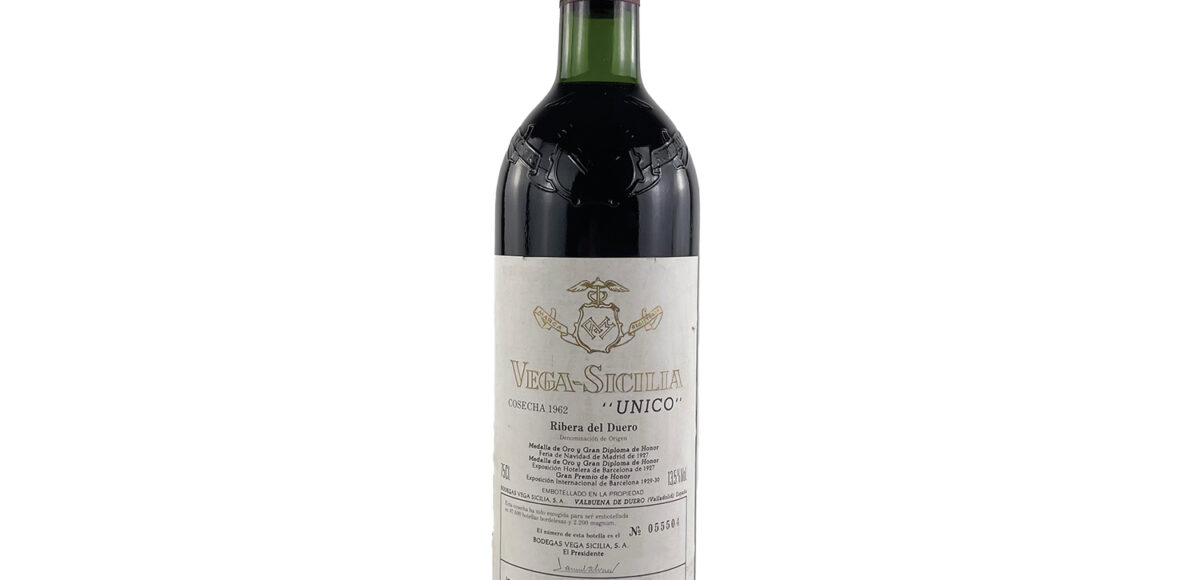
There was one notable exception, and that is the most prized Rioja of all, Vega Sicilia, a winery founded in 1864 by Don Eloy Lecanda y Chaves. He notably planted Cabernet Sauvignon and Merlot grape varietals he had imported from France, and which are still used in the wines today, although the majority blend is 80% Tempranillo. Wines are aged in barrels for eight to 10 years before release, an unusually long period by any global standard and top vintages such as 1962 and 1970 can fetch prices of approximately $1,000 per bottle at auction. The Vega Sicilia winery has enjoyed a reputation for producing top-quality wines, which is still as heralded as ever today.
In the late 1990s a whole new generation of pioneering winemakers emerged led by the Danish winemaker Peter Sisseck, who established Dominio de Pingus in the Ribera del Duero region in Spain at price levels that rival Vega Sicilia of $600 to $1,000 per bottle.
In the Priorat region, Álvaro Palacios emerged as a young superstar with his premium brand of L’Ermita, which utilizes a high percentage of the Carinena grape with spectacular results and price levels exceeding even those of Pingus and Vega Sicilia.
Lastly, in the Bierzo region of northern Spain, Bodegas Raúl Pérez Ultreia was the brainchild of Raúl Pérez. It uses the Mencia grape to produce full-bodied wines with structured balance and great aging potential, but with a much more modest price tag of $20 to $80 per bottle.
Spanish White Wines
In the past few decades, Spanish white wines have also greatly improved in quality, the most remarkable being Albarino or Alvarinho from Galicia in northwest Spain. On the lighter side, these wines are known for their minerality and are especially delicious when paired with seafood.
Two to try are Verdejo, a light-bodied wine with an oaky sauvignon blanc taste, and txakoli, a dry, slightly sparkling wine from the Basque country.
Typically, Spanish whites are priced between $20 and $30. These wines are mainly light in body and aromatic. They do face stiff competition from similarly priced French and U.S. rivals from Oregon and California but present a delightful value for money alternative.
Richard Torin is the owner of Clarets LLC (www.clarets.com), fine wine merchants, founded in 1992 and a supplier of great wines to a local and international clientele. Richard can be reached at rtorin@gmail.com.