The Beverly Hills Planning Commission at its Oct. 29 meeting approved several requests for Builder’s Remedy projects on South Rodeo Drive and Wilshire Boulevard and continued a discussion about a Builder’s Remedy project on Burton Way.
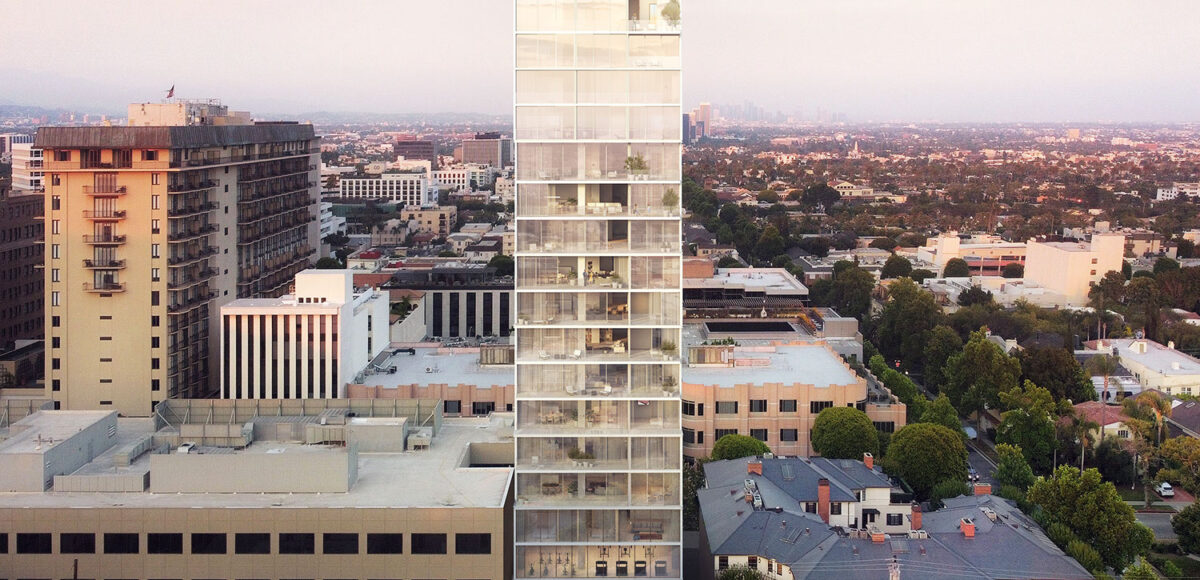
The decision to delay a discussion regarding the 26-story mixed-use project at 8844 Burton Way came on the heels of a preliminary 4-1 vote by the commission on Oct. 21 to deny a development plan review and density bonus permit for the proposed new structure. Members of the commission on that date instructed city staff to prepare a resolution denying the project, and the Oct. 29 review was expected to result in the commission adopting a final resolution to deny the development.
In its preliminary vote to deny the project, the commission cited as one of the deciding factors an alleged violation of California Health and Safety Code 17929, which prohibits the isolation of affordable housing units to a specific floor or area on a specific floor.
Commissioner Gary Ross said at the time that the Burton Way project violated the “spirit” of the law if not the law itself, as affordable units would be spread throughout the bottom five floors of the building.
Attorney Dave Rand, representing the applicant, asked for a continuance at the Oct. 29 meeting because the full commission was not present (Commissioner Terri Kaplan was not in attendance), and what he called “the gravity of the situation.”
“We believe the findings and the denial resolution were made in error, in violation of multiple state laws,” he said. “And we think given … the importance of your decision, it would be most appropriate to wait until there is a full commission present to be able to deliberate it.”
Rand also cited a letter sent to the commission by the California Department of Housing and Community Development (HCD) in response to its preliminary denial vote. The letter, dated Oct. 28, reminded the city of “its obligations under the Housing Accountability Act and specifically the requirements for making findings of denial.”
HCD specifically addressed the question of denying a project based on the dispersal of affordable units, stating that “dispersal requirements that are not required by state law and not found in the city’s objective standards cannot serve as a basis for denial.”
The letter further suggested that the city work with applicants on conditions agreeable to both parties, as long as those conditions don’t render projects infeasible.
Since the Oct. 21 meeting, the applicant for 8844 Burton Way submitted two revisions to the development, which included changes to further disperse the affordable units and to make them more comparable in terms of the number of bedrooms and bathrooms to those earmarked as market rate.
Commissioner Myra Demeter said that she had not had the opportunity to look at the most recent revision and noted that she would “need a continuance” to get all the information.
Multiple members of the public spoke in opposition against the continuance.
A special meeting will be held on Nov. 5 to review the matter.
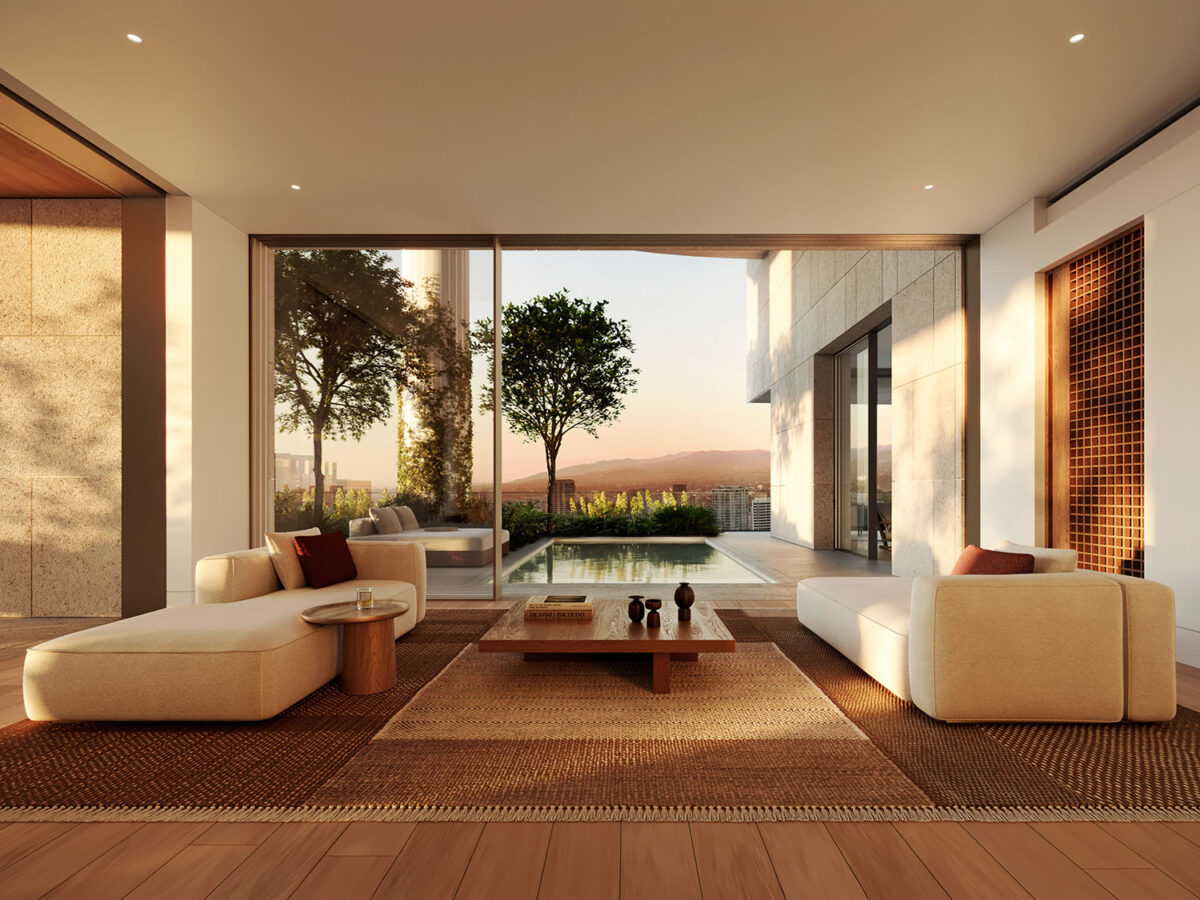
In other business, the commission conditionally approved, in a unanimous vote, a request from developer Masoud Netty of Wilshire Rodeo Company, LLC, for a development plan review and density bonus permit to allow for the construction of a 19-story, mixed-use development with 30 residential units at 145 S. Rodeo Drive.
It also conditionally approved a request from developer 9229 Wilshire Skyline, LLC for a development plan review, conditional use permit and density bonus permit to allow for the construction of a 14-story, mixed-use development consisting of 116 residential units, commercial uses and a 60-room hotel at 9229 Wilshire Blvd.
The buildings are the eighth and ninth Builder’s Remedy projects to be conditionally approved by the commission since Oct. 9.
Designed by Los Angeles-based architecture and design firm Cara, the development on South Rodeo Drive will replace an existing two-story office building. At 237 feet tall, the new project will include three levels of subterranean parking levels with 54 spaces as well as an additional subterranean level to potentially accommodate a restaurant kitchen, mechanical equipment and a residential screening room.
Six of the building’s 30 residential units will be reserved for low-income households.
In the proposal brought to the commission for deliberation, all six affordable units were located on three floors. During discussion, the commission requested that the applicant disperse those units more broadly, citing the same concerns they cited in their initial denial of the Burton Way project.
Ryan Leaderman, an attorney representing the developer, said that despite the further dispersal of affordable units not being required by state law, the applicant would agree to the commission’s request “in the spirit of compromise.”
During public comment, residents expressed opposition to the project, voicing concerns about increased traffic, noise and congestion, particularly during the construction of the project.
“I understand that the Planning Commission has limited discretion to deny the project … but the Planning Commission can and should impose conditions to at least try to ease our burden of the outrageous idea of a 19-story, completely out of proportion building that, without the Builder’s Remedy tragedy would never, ever have been built,” said Michelle Bellen, who identified herself as a resident of South Camden Drive.
The development at 9229 Wilshire Blvd. designed by Los Angeles-based architecture firm SPF:architects, will replace a two-story commercial building. Three subterranean parking levels would provide 140 shared parking spaces. The residential units would occupy most of levels two through 10, and a hotel would occupy levels 11 through 14.
A hotel operator hasn’t yet been identified.
The developments on South Rodeo Drive and Wilshire Boulevard are now open to a 14-day appeal period.