
“Suffs,” the musical telling of the early-20th-century suffrage movement, won Tonys for the Best Book of a Musical and Best Original Score written for the theater, both awarded to Shaina Taub, who created the musical and starred in it on Broadway. The opening night audience at the Pantages was wildly enthusiastic as this historical musical unfolded.
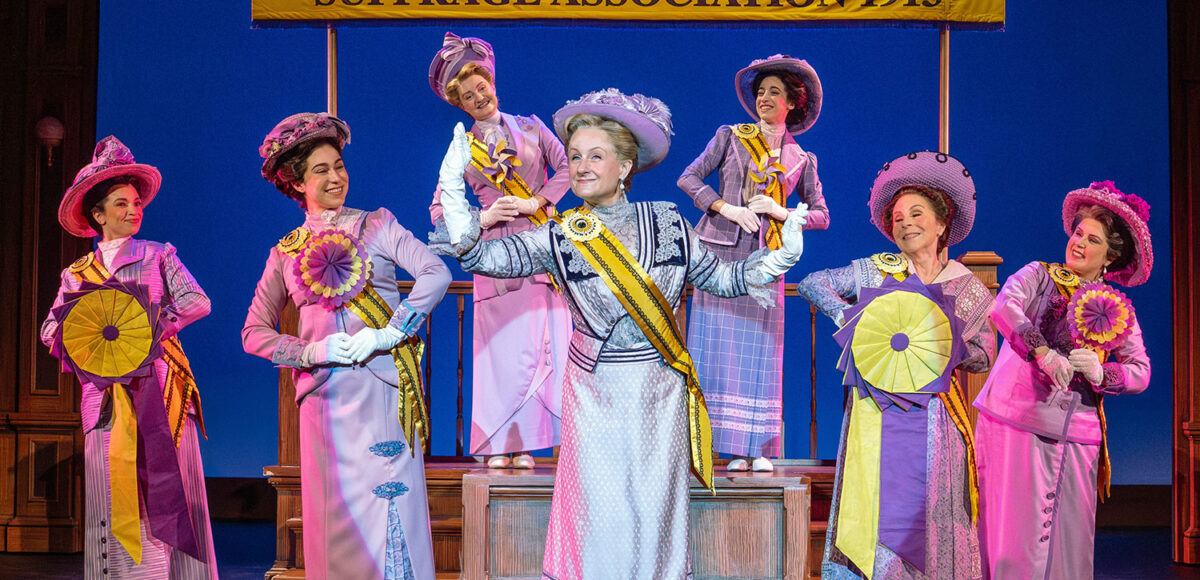
Ashamedly, I must admit that I knew little about the suffrage movement, only that American women did not get the vote until 1920. The trip down that aisle was long, circuitous and very, very slow. The opening number, “Let Mother Vote,” sung by Carrie Chapman Catt, one of the important leaders of the early movement and a protegee of Susan B. Anthony, cleverly illustrates the approach of the older suffragists. Always ladylike, she makes the appeal that mothers raised their sons to do good and be respectful and the respectful thing to do would be to give their mothers the vote. President of the leading suffrage organization, the National American Woman Suffrage Association (NAWSA), she ruled with her iron fist in a velvet glove.
Alice Paul arrives on the scene in 1913. Tired of waiting and seeing that the “ladylike” approach is going nowhere, she has other ideas, ideas that are rebuffed by Catt. Paul forms her own organization, taking a more direct approach by organizing a march in Washington to show the strength and volubility of these young women. A rift developed between Catt’s NAWSA and Paul’s new group, the National Women’s Party. Both recognized that a constitutional amendment would be necessary, but getting there was a stumbling block to them both.
Especially notable is the role of Woodrow Wilson, president throughout most of this battle, and his patronizing refusal to take the movement seriously. Although portrayed as a buffoon without nuance, it should be noted that historically, Wilson was the very antithesis of equal rights. His record on civil rights runs to the overtly racist and he jailed Paul and her supporters for protesting in front of the White House in the guise of treasonous activity that was counter to national security. Like all the other characters in this play, the men are played by women.
Photos courtesy of Broadway in Hollywood
It must be said that the play is inventive and the musical approach is meant to go down like a spoonful of sugar. The difficulty in telling this story is that everything comes off as episodes, separate scenes without enough yarn to knit them together, much like watching the tableaux at the Pageant of the Masters in Laguna Beach. “Suffs” is all exposition, much told musically but not entirely effectively. The songs overwhelm the narrative. There is a song for everything, something that denies both the development of the individual characters and the story beyond its exposition. Recognizing that my opinion lies outside that of the Tony voters, Taub’s music is overly familiar. She has borrowed from the best; many times I was reminded of the scores of “Hamilton” and “Rent.” I was frustrated because I recognized refrains from other musicals but just couldn’t quite pinpoint from where they were borrowed.
She has a big story to tell, but because of the episodic way she has chosen, many important characters are shoehorned into scenes that do them little justice. The primary example of this is the introduction of Ida B. Wells, one of the most important figures in the history of civil rights who was shoved to the side by the leaders of the suffrage movement who, historically, found it more expedient to make it an all-white association. Treated tangentially is Catt’s homosexuality, presented in a lament as she sings “If We Were Married” to her longtime companion in life and in the movement, Mollie Hay.
There is no “pow” finish, just a clever tip of the hat to Paul and her continuation of the fight in the 1970s as she campaigned for the Equal Rights Amendment. Interestingly, however, Catt’s post-vote accomplishments were sidelined. She was the founder of the League of Women Voters.
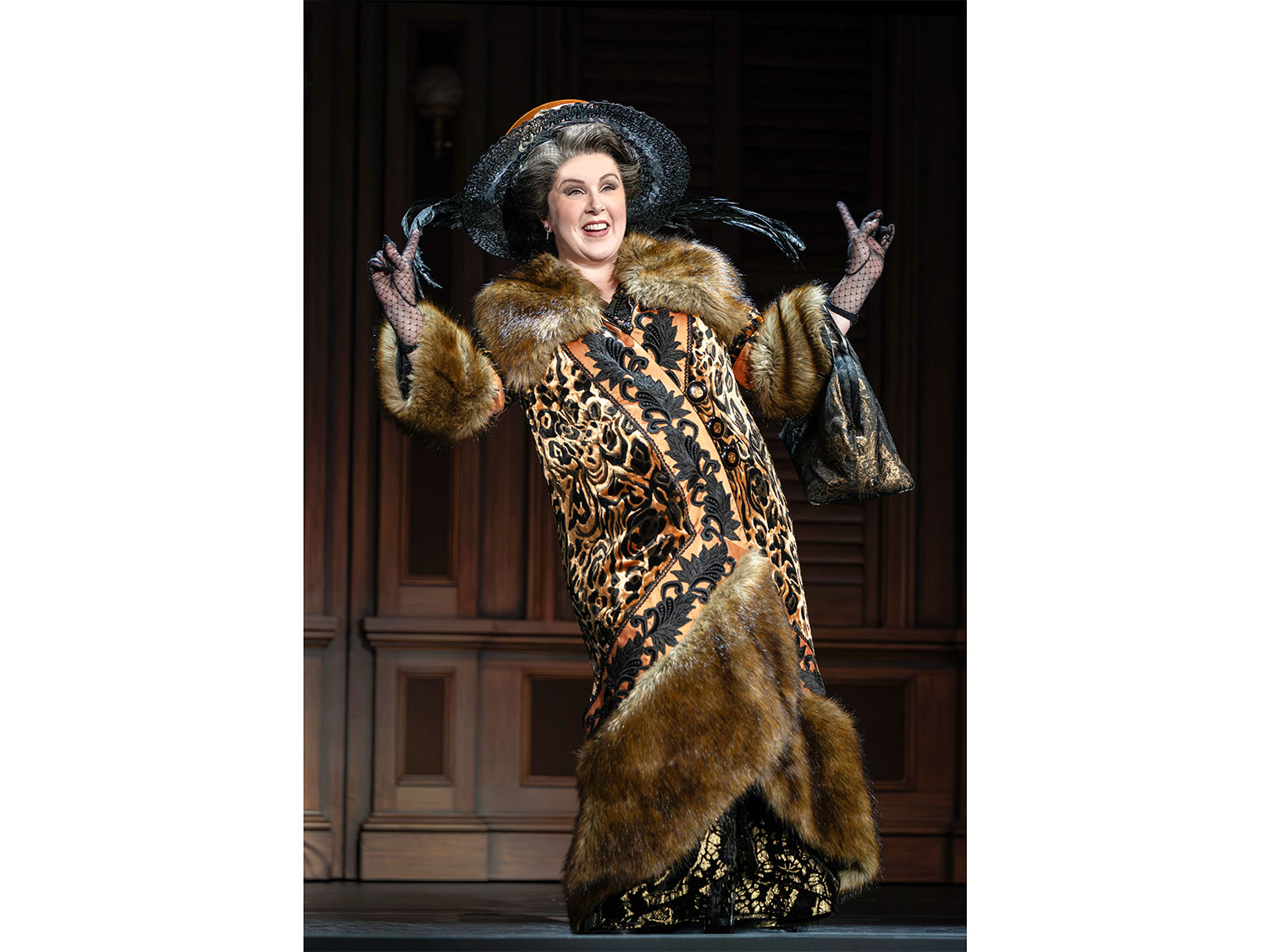
The cast was good, but perhaps due to the ensemble nature, no one leaped out. Maya Keleher is a sincere and emotional Alice Paul and Marya Grandy is a steely Carrie Chapman Catt. Danyel Fulton never quite catches on as Ida B. Wells, some of which may be the nature of the way she was written, but I would have liked a bit more fire. Laura Stracko as Alva Belmont, a wealthy woman underwriting Paul’s group, stopped the show with her antics and furs. The costumes were evocative of the era and the use of the minimalist stage was inventive, although the choreography was rather perfunctory.
I wished I had liked it as much as the majority of the opening-night audience. I just wished it had been better.
Now playing through Dec. 7, Tuesdays through Sundays. Check the Broadway in Hollywood website for times.
Hollywood Pantages Theatre, 6233 Hollywood Blvd., Los Angeles.
Neely Swanson spent most of her professional career in the television industry, almost all of it working for David E. Kelley. In her last full-time position as Executive Vice President of Development, she reviewed writer submissions and targeted content for adaptation. As she has often said, she did book reports for a living. For several years she was a freelance writer for “Written By,” the magazine of the WGA West, and was adjunct faculty at USC in the writing division of the School of Cinematic Arts. Neely has been writing film and television reviews for the “Easy Reader” for more than 10 years. Her past reviews can be read on Rotten Tomatoes where she is a tomatometer-approved critic.