Municipal League Holds City Council Forum

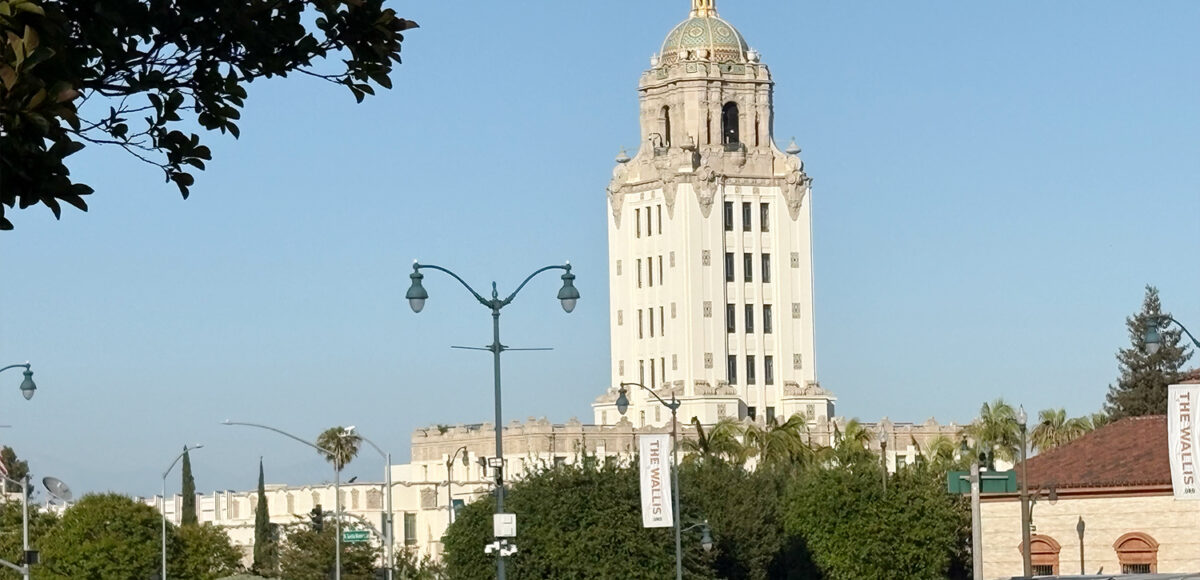
Candidates running for three open spots on the Beverly Hills City Council participated in a forum on April 30 at City Hall, sponsored by the city’s Municipal League. 

Over the course of two hours, participants provided their campaign platforms and answered questions about issues pertaining to city governance. 
Candidates’ pitches to voters varied greatly, ranging from a reliance on existing experience in city politics to an emphasis on being a newcomer to a singular focus on considering a city charter.

According to event organizers, approximately 50 people were in attendance, not including those who were watching the livestream from home. 

The following are snippets, edited for length, from each candidate’s opening remarks. 

Roger Tannenbaum: Safety is my first priority. With rising incidents of violence across the country and in the world, our police presence needs to be felt here in Beverly Hills. We need to hire more boots on the ground. 

I’m extremely concerned about our small businesses. They give Beverly Hills its charm. Another thing I like to talk about is Hollywood. I think that we feel forefront to bring Hollywood back to the city. Lastly, I fully support the Joint Powers agreement between the city and the schools.

Rebecca Pynoos: I’m the third generation of my family to live in the city. I am running right now because I’ve been paying attention and we cannot afford the same old, same old anymore. I truly feel I’m the new voice with deep roots that our city needs right now. 

Beverly Hills is being led reactively instead of proactively. Nowhere is this clearer than in housing. After three failed attempts to pass a certified housing element in the city, we allowed it to lapse, opening the window to 16 Builders’ Remedy projects. That’s a failure of people on Planning Commission who don’t have a planning background, and our council. 

Equally troubling is a lack of representation for entire parts of our city. When John Mirisch terms out, there will be nobody representing the entire south area, where two-thirds of our residents live. I live in that area.  

Jonathan Mariande: I’m running on one central practical idea, which is a charter study commission. The commission would examine openly whether or not our 1914 governance structure is adequate for a 2026 city, and it would deliver a public work product that residents can judge that would include a clear map where accountability lives, where it fails, recommendations on permitting, procurement and process reform, a serious look at fiscal discipline and litigation exposure, a framework for transparency that protects both public access and legitimate security, and only if warranted, a charter language that voters themselves would approve or reject. 

It’s a maintenance project on the operating system of local government, something to do out in the open with residents participating at the center.

Andy Licht: For 14 years, I’ve had the honor of serving on Beverly Hills commissions. For me, your public safety always comes first, period. That means ensuring our police and fire departments have the staffing, technology and support they need. It also means addressing quality of life issues like speeding, reckless driving and neighborhood disruptions before the problems. 

I will create an Expediter position in the city to ease approval for building projects. We will grow our economy by supporting local businesses and smart investments, not by increasing taxes or fees on you the residents. Protecting our community and quality of life means supporting our schools and families, helping seniors age in place, ensuring fair treatment for renters and addressing homelessness for both with both compassion and accountability.

Ariel Rofeim: I am a product of Beverly Hills. I was raised here from sixth grade. I’m Cambridge-educated, and from there, I was a White House intern, where I got to serve for President Barack Obama. And after that, I went to law school in New York, where I lived right by a train station.

I am concerned with the Metro station, but I do believe that we can address the station in a way that is a net positive for our city, and a part of that is compassionate enforcement. To me, compassion enforcement means not only compassion for those that are in unprivileged situations, whether they are unhoused or mentally ill, but compassion for our city too, for our residents. 

Lester Friedman: I moved to Beverly Hills in 1986 because I wanted to have my children go through public schools. I became mayor on March 31, 2020, and that’s about the time that everything started closing down during COVID. We also had civil unrest. 

It was during that period of time that I was spending every weekend, for many, many weekends at our Emergency Operations Center. We really had to accumulate everybody into one place, and the outcome of that was what is now the Real Time Watch Center. During my second term as mayor, which was in ’24, we had the fires in the Palisades and the Altadena area. With our fire chief, I would go through the hillside area and make sure everybody was okay. We were looking for areas for potential hot spots. I bring the experience and leadership of having those experiences. 

Sharona Nazarian: When I joined City Council, we were facing serious challenges. We took action on public safety. The Real Time Watch Center was launched. One of the final mayoral initiatives that I launched was Drone in a Box. 

Metro is scheduled to open on May 8, I’m proud to share that Beverly Hills is ready. This is also an opportunity to reimagine the area with vibrant, resident-focused businesses such as a grocery store. 

We spend about 50% of our operating budget on police and fire because our residents deserve to get world-class protection. This is and will continue to be my top priority. We also want to continue working closely with our school board and support our kiddos, because they are at the heart of our city. 

Russell Stewart: I’m a governing board member of the Beverly Hills Unified School District. I was someone who came in with very little experience in school districts or in governance, but what I had was common sense. In my first few weeks, I sat down and said, “Show me the books. Show me the numbers.” And they didn’t make any sense, which is why we changed out our superintendent, three out of the four principals and many cabinet staff members. The path that we’re now on is unbelievable, and I want to come to City Hall and do the same thing. 

Clayton Saunders: I am Clayton Saunders, please call me Moshe. My main concern is safety. I talked to many people who say they don’t feel safe here. The lady across the street, she doesn’t come out barely during the daytime to get her mail, and never goes out at night whatsoever. She says it’s because she does not feel safe here in Beverly Hills.

We need to fill these retail shops, and we need to do some type of tax incentives. My team and I have a plan that we have already talked to many different owners, and it’s called “Live Here, Shop Here” for reduced rates for the locals who live here and show their IDs. 

As far as security goes, I have a program where we’re going to get metal detectors in every religious temple, every school. It is not a question of if something’s going to happen, it’s when something’s going to happen. 

Barry Axelrod: I’m a resident and business owner here in Beverly Hills. I think Metro is a really major problem. Metro is a company who came here, they started talking to the residents, they started talking to business owners. They promised all types of things and they never come through. I want to create a committee, something that is part and parcel to Metro, and Metro is going to have to answer to us. 

The City Council has to be more business oriented. I created a company during COVID, became probably one of the most successful retail stores on South Beverly Drive. We have had very serious issues getting everything done that we needed. Trouble getting permits. A lot of the businesses in Beverly Hills are having serious problems. They’re being fined because there are various types of rules, regulations that are not conducive to good business. 

Andrew Kole: I think City Council needs new blood. I think they need new ideas. 

I see there being two open seats. Lester, because he’s been there eight years and because I am a big believer that term limits should be eight years, I don’t think you need to be 12 years on a city council. I take him off my board. Russell, who I like a lot, I take off my board because he’s a member of the school board. In my opinion, if you run for a board, you need to finish your term. So that leaves me with, who do you vote for? Obviously, I’d love your vote. I do not expect to be the landslide of anything here. There are four people that I’ve spent a lot of time with, and that is Roger, Rebecca, Jon and Ariel. I think there’s an opportunity for the city to really pay attention to what these four people say and pick two. A new skill set is what I’m really talking about, different perspectives. And I hesitate to say, since I’m old as dirt, younger people and different ages.