

As another year nears its end, we often feel a mixture of emotions. Joy, gratitude, pride, and hope can intertwine with exhaustion, disappointment, and anxiety. These emotions guide us, and we owe it to ourselves to tune in and listen. The holidays often provide a time to step back from our usual responsibilities and align with our core values, and our emotions are a key to understanding how well we are doing and where we need to realign.
This holiday season, I hope you give yourself the gift of a pause, a time to reflect and make wise decisions about how to spend your energy, time, and resources in 2026. What are your overarching goals? Did you move forward in 2025? What are you most grateful for? What brought you happiness?
Then, be brave and flip the coin. What didn’t go as planned? What adversities did you face? When did you stumble? What lessons did you learn?
The answers to these questions help guide us so that next year can be better. Yes, each year can surpass the last! How can we create our best year yet? The answer shouldn’t be left to chance. While luck may play a role, sustained effort, education, and endurance are crucial for most of us.
I often reflect on my friend Kerry Gruson, whose life changed drastically when she was strangled and left for dead by a stranger. She now lives with Post-Traumatic Parkinson’s Disease and can hardly move, and her voice is a mere whisper. Yet, in the 52 years since her assault, she has led an extraordinary life, competing at the highest level of sports with her able-bodied partner. Kerry’s voice is quiet, but her message is loud and clear: “Together We Can.” Kerry and Caryn Lubetsky have earned three Guinness World Records and have been featured in multiple documentaries for their remarkable athletic achievements.
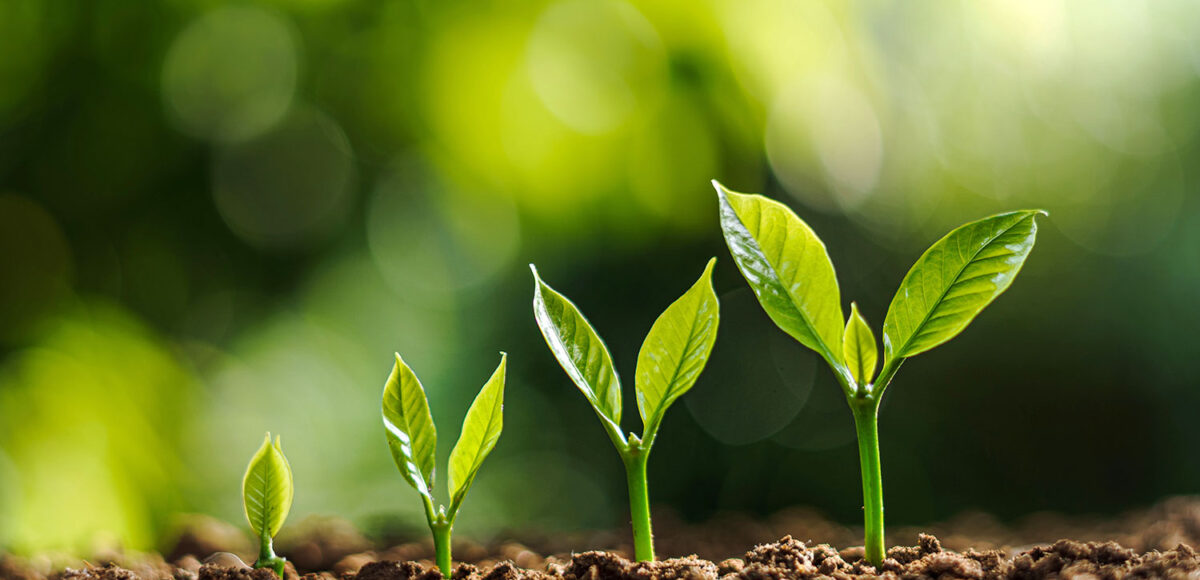
These women embody what psychologists call a growth mindset, the belief that our abilities and emotional resilience can expand with effort and intention. Developed by Stanford psychologist Carol Dweck through decades of rigorous research, the growth mindset is the understanding that our most fundamental abilities can be developed through dedication and hard work. Intelligence and talent are not fixed traits but capacities that can evolve throughout our lives. Those with growth mindsets embrace challenges, persist through setbacks, and view effort as essential to mastery. At 78, Kerry’s life keeps getting better and better.
The growth mindset contrasts with a fixed mindset, which assumes our character and intelligence are static. People with fixed mindsets often avoid challenges, give up easily, see effort as fruitless, ignore useful feedback, and feel threatened by the success of others. The practical truth is this: when we believe we can grow, we actually do, and the reverse is also true. As Henry Ford said 100 years ago, “Whether you think you can or you think you can’t, either way you are right.”
The transition into a new year creates a “fresh start effect,” allowing us to see ourselves differently. This psychological clean slate enhances our motivation and makes us more likely to pursue goals. The New Year acts like a reset button for our brains, giving us permission to begin again.
When we enter January with a growth mindset, we actively create conditions for our brains to rewire themselves. We’re opening new neural pathways, strengthening connections that support new behaviors, and becoming different individuals than we were the year before.
A growth mindset thrives not on perfection but on awareness. If 2025 brought challenges, whether personally, professionally, or emotionally, you are not alone. Viewed through a growth mindset lens, discomfort becomes useful. The questions shift from “Why is this happening to me?” to “What is this teaching me? What skills are required? What strengths am I discovering?” In short, how does this challenge help me grow?
Self-compassion is vital to a growth mindset. Harsh self-judgment for unmet goals or mistakes anchors us to a fixed mindset. Letting go of unfruitful projects, relationships, or habits is not about minimizing pain; it contextualizes it. A growth mindset is grounded in resilience, marking the difference between being a victim of circumstance and a student of life.
Letting go doesn’t mean giving up; it clears space for what better aligns with your goals. Neuroscience illustrates this through synaptic pruning, where unused connections are trimmed to make room for stronger ones. You’re allowed to prune as well.
Traditional resolutions focus on doing: exercising more, earning more, or dieting. While worthy, they often fail because they lack a foundation in identity and sustainability. A growth mindset asks, “Who do I want to become in 2026?” The variations of this identity are endless. Perhaps you want to become someone who values curiosity over certainty, who leads with kindness, who finds joy in the small moments, and who provides optimal conditions for their body and mind.
People often struggle to change because they aim for dramatic reinventions. A growth mindset works through ongoing micro-experiments aligned with personal goals. These are easy, low-pressure behaviors that are more sustainable. Small steps, like five-minute meditations or reading two pages of a book, allow for progress without the overwhelming pressure of trying to reimagine everything overnight. Micro-experiments reduce fear and increase confidence, creating opportunities for your brain to forge new pathways. Be creative in your approach.
Your psychological ecosystem matters as much as your habits. Emotions and mindsets are contagious. For 2026, consider spending more time with curious rather than critical individuals. Seek mentors who challenge you kindly. Join groups that inspire learning and reduce exposure to those who reinforce a fixed mindset through limiting beliefs. One positive change I made in 2025 was joining a local Rotary club. My inbox now fills with invitations to volunteer and uplifting photos from events even when I can’t attend. This community of do-gooders has brought me a warm and wonderful feeling of belonging.
Think of the new year as a blank page, not an exam. You don’t need to prove anything, just explore, learn, and continue evolving into a better version of yourself. Embracing a growth mindset for 2026 means prioritizing progress over perfection, compassion over criticism, and curiosity over fear. It embodies the knowledge that you are, at any age or stage, capable of learning, expanding, healing, and transforming. Your brain is designed to grow, and the new year presents a unique opportunity to harness that capacity.
This year, may you strive toward becoming the person capable of achieving your dreams, shaped not by pressure but by possibility. Here’s to a beautiful 2026, one where your brain’s remarkable capacity for growth harmonizes with your heart’s deepest intentions. Embrace the journey and allow yourself to transform and I hope you have your best year yet!
“Becoming is better than being.” — Carol Dweck
Beverly Hills Courier columnist Dr. Eva Ritvo is a psychiatrist with more than 30 years’ experience practicing in Miami Beach. She is the author of “Bekindr-The Transformative Power of Kindness” and the founder of the Bekindr Global Initiative, a movement to bring more kindness in the world. She is the co-author of “The Beauty Prescription” and “The Concise Guide to Marriage and Family Therapy.” She is also the co-founder of the Bold Beauty Project, a nonprofit that pairs women with disabilities with award-winning photographers creating art exhibitions to raise awareness. Dr. Ritvo received her undergraduate and medical degrees from UCLA, and psychiatry residency training at Weill Cornell Medicine.