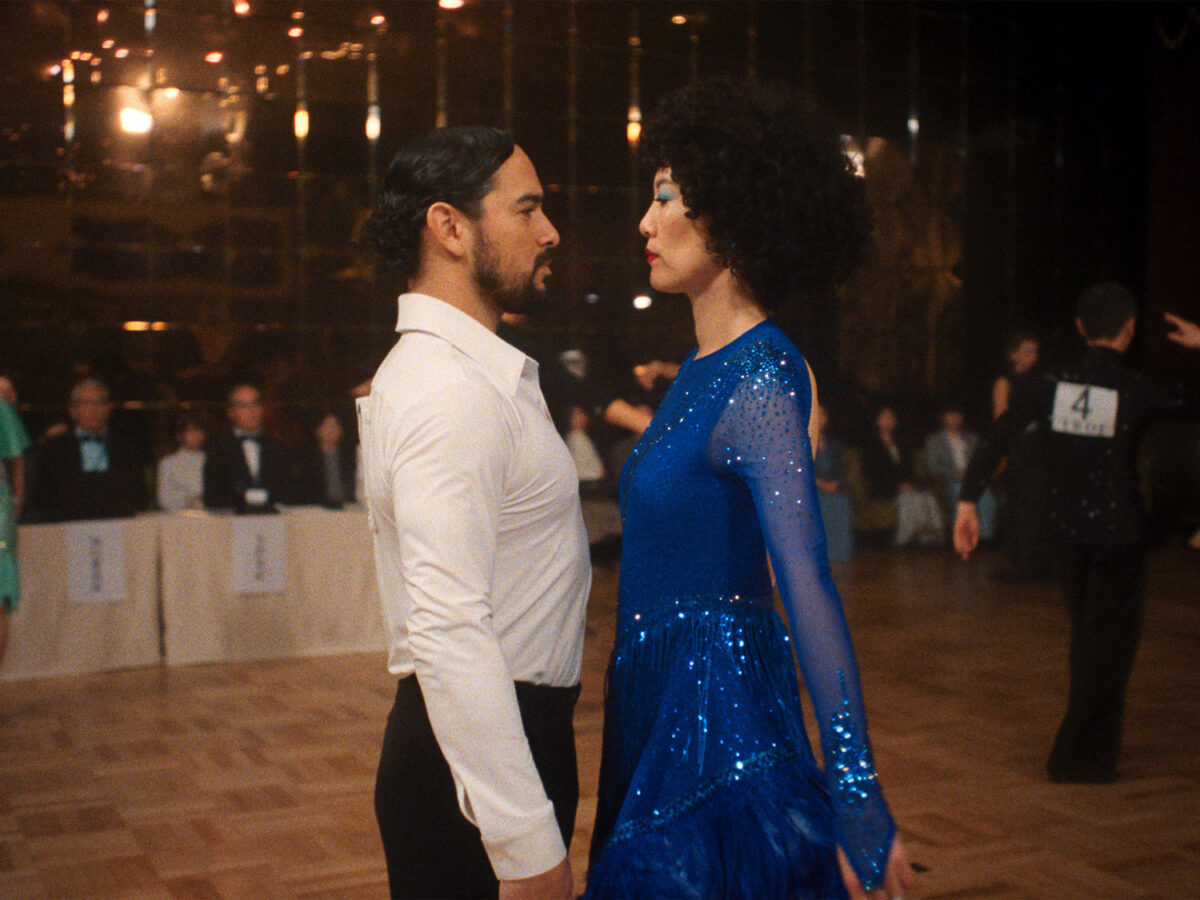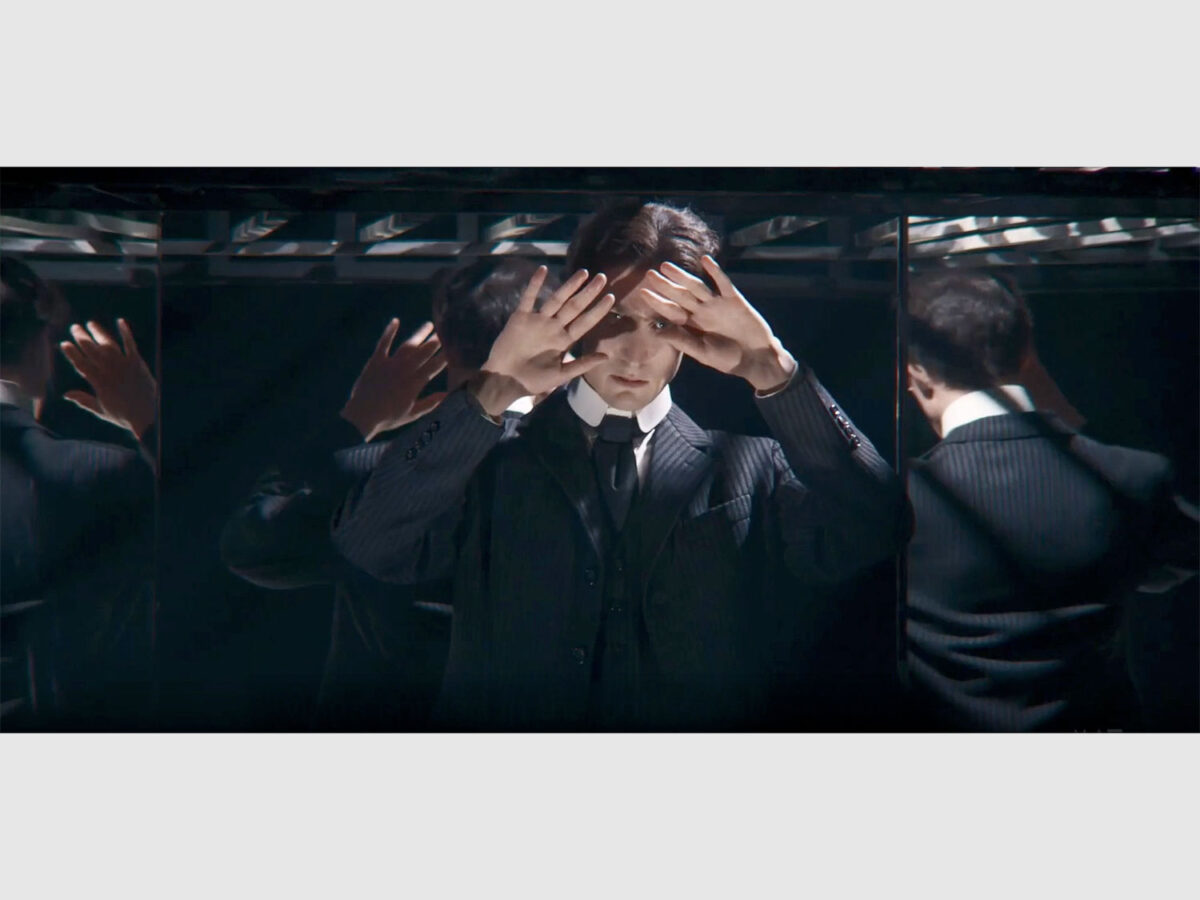


The opening shots of “Rose of Nevada” reveal a village by the sea that prosperity has left behind. The camera alights on stones with cracked crevices filled with brown lichen and dying moss. There is precious little vegetation and nothing much seems to grow in this dead and dying town. The camera pans over the cracked mud, the rocky terrain, the barely living trees and tarry sand along a Cornwall shore that holds nothing in its bay. Thirty years before, a fishing boat, the Rose of Nevada, set sail on a fishing trip under crewed with only two and never returned, lost at sea, and with it the captain and Alan, the husband of Tina and father of twins Jess and Linsey. Blaming the loss at sea on the fact that the ship was under crewed, the disappearance has never been forgotten. Luke Richards, who should have been the third sailor, had overslept and allowed the boat to leave without him. Despondent over his role, he later committed suicide and his mother, Mrs. Richards, has become a ghost, convinced that he will one day reappear. And Tina, now with a grown-up Jess still by her side, has long since become bitterly resigned to her impoverished fate.
There’s no industry, no agriculture, and the last fishing boat has long since decayed and with it, the last vestiges of hope. Mrs. Richards wanders the streets when she can escape home, desperate and demented, convinced that her son will be returning home. Tina makes do, but her long-missing husband is never far from her mind.
Since the boat disappeared, the town’s fortunes drowned with it. Money is tight all around. You can feel the cold harsh wind as it whips the sea into a fury. Nick, a young lifetime resident of the town, is at a crisis point. With no money for heat, Nick has to find a way to support his young wife and baby, who find little solace and warmth under the bed covers. Worse, rain has begun to fall, at first a spit and gradually building to a torrent as the wind lashes against the house and finds holes in the roof to saturate the contents and unprotected family. Nick is desperate for money, but there’s no work to be had in this god-forsaken part of the world.
Liam, a handsome young bounder, has just arrived in the village looking for a fresh start from whatever life he hurriedly left. The pub is his milieu and Tina’s beautiful daughter Jess has caught his eye. Not entirely a scoundrel, but he clearly is always on the lookout for the closest exit.
Strange times are afoot. Mike Bruffin, whose family owned the Rose of Nevada, is shocked one morning to find the missing fishing boat tied up at its old mooring. There can’t be an explanation; there must be an explanation. He corrals Tina, the widow, and shows her the boat. They have no explanation, but they do have a plan. They must send it out again, hoping that it will bring back fish and prosperity and maybe answers to its disappearance. But who will crew it? They have a captain in grizzled old man Murgy, anxious to be out to sea once again, but the dying town is short on young, hearty sailors. Nick, with no experience but young and desperate for money for his family, begs for the chance. Enter Liam, strong and fit, no experience but also no ties, offers himself as well. Fully crewed, unlike the original voyage, Murgy’s anxious to get going. This is their chance to change their futures and change it does.
Weighing anchor, the Rose of Nevada heads out to sea, fishnets in tow and an inexperienced but eager crew at the helm. And catch fish they do, a veritable bounty. Riding through relentless wind and rain, they arrive safely in port, greeted by scores of happy townspeople. Their dull, dark, destitute village has been transformed. There are signs of prosperity everywhere. Liam and Nick are greeted enthusiastically by strangers. Nick recognizes no one. Neither the port nor the people are familiar to him. Liam immediately spots the prettiest girl in town who initially gives him the cold shoulder. Nick is embraced by a couple who look vaguely familiar. This was their village on the day that the Rose of Nevada went missing, except now it hasn’t. Time has warped and it is thirty years earlier, and Nick has been mistaken for Luke Richards and Liam, mistaken for Alan, is dragged home by a young Tina and their baby twin daughters. This can’t be; it mustn’t be. Liam may be fancy-free and up for a new adventure, but Nick must get home to his wife and baby.
They have to find a way to get home. But what happens if they can’t? “The Rose of Nevada” posits questions, what ifs and gives no answers. What are the consequences? There are no ghosts here, only living, breathing people with conflicting needs. What would you do? What do you see? What does the future or, rather, the past hold?
This film is truly the work of one man, Mark Jenkin, the director, writer, cinematographer, editor and sound designer who also wrote the score. I find absolutely no fault in any of his roles. As the writer, he presents us with a science fiction, time-travel piece that is both thought-provoking and philosophical in nature. The slow pace that Jenkin the director and editor begins with is deceptive because he builds the mystery as a thriller that layers the action of the sea with the disorientation of the time shift. The score is haunting and the sound design heightens the edginess of the premise. But it is Jenkin the cinematographer who excels at bringing all the pieces together because his use of close-ups on the rocks, dying vegetation and decaying structures platforms the movie to shift dramatically with the rewind to the earlier period. Never has harsh landscape seen microscopically been used so effectively as a character in a film.
The actors are outstanding, using silence and pauses to great effect. Mary Woodvine as Mrs. Richards is an otherworldly ghost, a Miss Haversham who is locked in the moment that her son died. Rosalind Eleazar, Tina, portrays her disappointment in life and in her husband, through both time frames, with a modicum of hope and an occasional glimpse of warmth. Callum Turner plays Liam with a bit of insouciance and roguish charm, but whether in the past or the present, he is clearly untrustworthy. George Mackay, as Nick, triumphs as the kind hearted soul, always watching out for the elderly Mrs. Richards and trying to provide for his young family without the means or talent to do it. His warmth and worry are palpable.
“Rose of Nevada” is the very definition of an independent movie, delving into what is often a pop culture topic, time travel, with depth and intelligence. This film is definitely worth your time.
Neely Swanson spent most of her professional career in the television industry, almost all of it working for David E. Kelley. In her last full-time position as Executive Vice President of Development, she reviewed writer submissions and targeted content for adaptation. As she has often said, she did book reports for a living. For several years she was a freelance writer for “Written By,” the magazine of the WGA West, and was adjunct faculty at USC in the writing division of the School of Cinematic Arts. Neely has been writing film and television reviews for the “Easy Reader” for more than 10 years. Her past reviews can be read on Rotten Tomatoes where she is a tomatometer-approved critic.