Human beings are social creatures. Long before social media, streaming services, and smartphones, survival depended on belonging to a tribe. Our brains evolved to seek connection and community, and the World Cup taps directly into this ancient wiring.
As we gather for the world’s largest sporting event over the next weeks, national identity becomes more salient. People wear team colors, gather in public spaces, and share victories and disappointments with strangers. Suddenly, someone sitting next to you in a restaurant, airport lounge, or sports bar feels like part of your team.
Neuroscientists have identified systems in the brain that help us resonate with the emotions of others. When we see someone laugh, cry, celebrate, or grieve, parts of our own brain activate as if we were sharing the experience ourselves. This helps explain why a goal scored thousands of miles away can trigger genuine excitement in people who have never met the players and may never visit the country they represent.
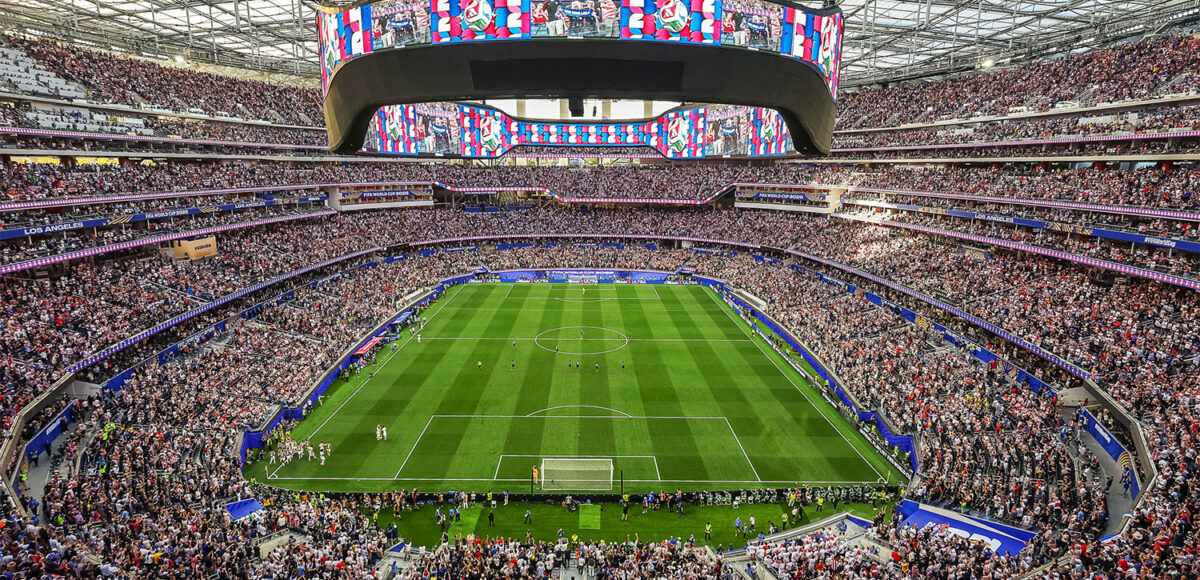
The effect becomes even stronger when experienced collectively. Psychologists call this collective effervescence, a heightened sense of energy and connection that emerges when people share a common focus and emotional experience. The World Cup may be one of the largest examples of this phenomenon on Earth.
This year’s tournament is particularly special because it comes to us. Matches will be played across the United States, Canada, and Mexico, including Los Angeles, Miami, New York, Dallas, Atlanta, and more. For many Americans, this is a rare opportunity to experience the world’s biggest sporting event in person.
Americans often compare the World Cup to the Super Bowl, but the comparison only goes so far. The Super Bowl captures one country; the World Cup captures the globe. A better parallel might be the Olympics, yet even that spreads its attention across hundreds of sports and champions. The World Cup focuses the entire world on one game and one trophy, and the stakes feel different. A baseball team can lose 60 games and still have a successful season. In the World Cup, there are no second chances. Every match carries the weight of national pride and years of preparation, and a single mistake can end it all.
Soccer’s accessibility helped make it the world’s most beloved sport. All you need is a ball and an open space from the streets of Rio de Janeiro to schoolyards across Asia and parks throughout North America. That simplicity is part of what gives this tournament its extraordinary reach. More than 5 billion people are expected to engage with it in some way, meaning well over half the world’s population will share a single collective experience.
Research also suggests that simply anticipating something positive boosts our mood long before the event itself arrives. Friends will organize viewing parties. Families will gather around televisions. Conversations will begin with, “Did you see that match?” In an era when much of the news cycle focuses on conflict and uncertainty, there is real value in having something joyful to look forward to.
Some Words of Caution
Like most things in life, there can be a dark side too. Watching the World Cup can ignite the addiction pathways in our brain. The drama of knockout rounds, the unpredictability of upsets, the emotional swings of penalty shootouts all create a neurological cocktail that keeps you coming back for more. Matches are played at all hours across time zones, and with every game feeling like a must-watch, it is easy to lose track of time, sleep, and obligations.
Before the tournament begins, it’s worth setting some intentional boundaries. Late-night games on a work night might be best saved for a recording. Children’s bedtimes, family dinners, and important commitments deserve protection even from the world’s greatest sporting event. A simple plan goes a long way. Decide in advance which matches are priority watches and be judicious about the rest. Five weeks is too long to be sleep-deprived, distracted and preoccupied. Remember habit formation can occur in less than 30 days.
The same caution should be applied to sports betting. In addition to being the world’s largest sporting event, it is also one of the largest gambling events. The 2026 World Cup is expected to generate $50 billion in wagers globally. U.S. betting alone is projected at $2.8-3-1 billion. Mobile apps have made betting easier than ever, and TV and mobile devices and are bombarding us ads. Gambling activates the same part of our brain as when we use cocaine and can easily go from a fun activity to one with serious financial and mental health consequences. If you choose to participate, set a firm budget before the match kicks off and stick to it. The emotional stakes of the World Cup are already high enough without adding financial ones.
Excess use of alcohol is another risk to take note of. Beer drinking is most common and can be hazardous especially when consumed over long periods, in the hot sun and when combined with driving. Domestic violence has been shown to rise on days of big sporting events, and we are all too familiar with cases of fan violence. We need look no further than the high number of incidents in NYC after the Knicks’ recent win.
The happiest and healthiest fans remember that sports are an opportunity for connection and often for celebration. The goal is to enrich your life during these weeks, not to emerge on the other side exhausted, behind at work, and with strained relationships or pocketbooks.
Whether you are a devoted fan who knows every player on every roster or someone who only tunes in during World Cup years, there is something profound about the World Cup being played here. In a time filled with anxiety about wars and finances, loneliness, political division, and the rapidly evolving technology, this tournament offers a chance for a shared human experience and joy. And it will be an excellent opportunity to learn what LA needs to do for the 2028 Olympics. Let the games begin.
“Sport has the power to change the world. It has the power to inspire. It has the power to unite people in a way that little else does.” — Nelson Mandela
Beverly Hills Courier columnist Dr. Eva Ritvo is a psychiatrist with more than 30 years’ experience practicing in Miami Beach. She is the author of “Bekindr-The Transformative Power of Kindness” and the founder of the Bekindr Global Initiative, a movement to bring more kindness in the world. She is the co-author of “The Beauty Prescription” and “The Concise Guide to Marriage and Family Therapy.” She is also the co-founder of the Bold Beauty Project, a nonprofit that pairs women with disabilities with award-winning photographers creating art exhibitions to raise awareness. Dr. Ritvo received her undergraduate and medical degrees from UCLA, and psychiatry residency training at Weill Cornell Medicine.